
Brake Pads - Racing
- Product
- Qty in Cart
- Quantity
- Price
- Subtotal
-

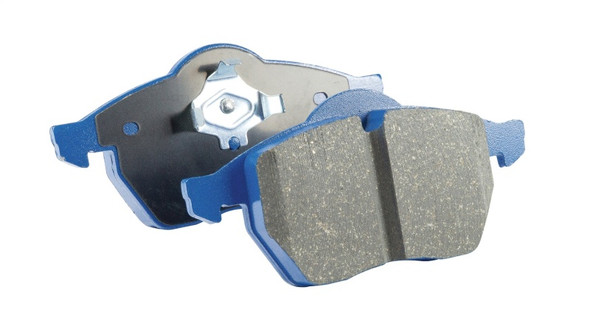
EBC 98-05 Porsche 911 (996) (Cast Iron Rotor only) 3.4 Carrera 2 Bluestuff Front Brake Pads - DP51514NDX
EBC
MSRP: $298.74$283.80Are these pads suitable for track days?EBC Bluestuff pads deliver aggressive stopping power with a high friction sport and race material ideal for track days and spirited driving.What is the expected...MSRP: $298.74$283.80 -
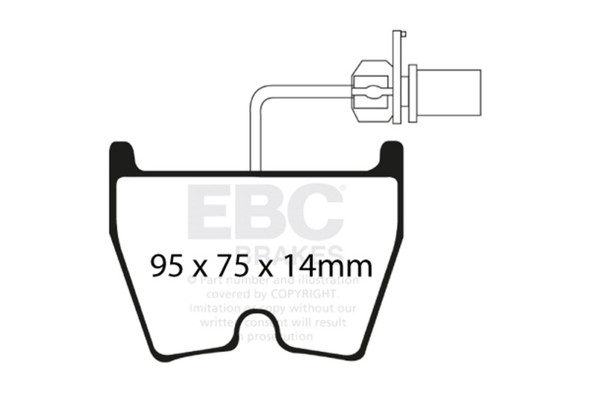

EBC 06-09 Audi RS4 4.2 (Cast Iron Rotors) Bluestuff Front Brake Pads - DP51513NDX
EBC
MSRP: $360.18$342.17What is the typical lifespan of EBC Bluestuff brake pads?EBC Bluestuff brake pads require moderate maintenance; their lifespan depends heavily on driving style and vehicle fitment.Can EBC Bluestuff...MSRP: $360.18$342.17 -


EBC 2018+ Audi TT RS Quattro 2.5L Turbo Bluestuff Front Brake Pads - DP51513/3NDX
EBC
MSRP: $360.18$342.17What vehicles are EBC Bluestuff Brake Pad Sets compatible with?EBC Bluestuff Brake Pad Sets precisely fit 2017-2023 Audi RS3, TT Quattro, and TT RS Quattro models.What is the installation process for...MSRP: $360.18$342.17 -


EBC Brakes Bluestuff Street and Track Day Brake Pads - DP51473NDX
EBC
MSRP: $332.36$315.74What vehicles are EBC Bluestuff Brake Pad Sets compatible with?EBC Bluestuff Brake Pad Sets precisely fit 2003-2017 Audi Q7, Porsche Cayenne, and Volkswagen Touareg models for optimized performance...MSRP: $332.36$315.74 -

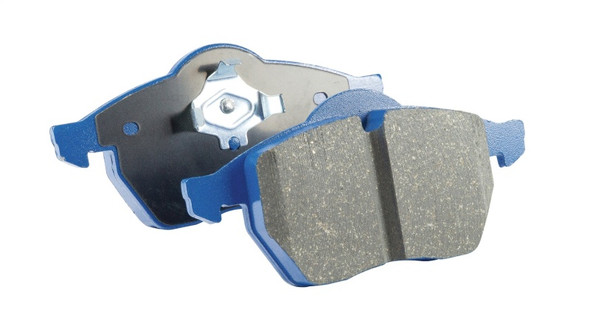
EBC 17-21 Honda Civic Type-R (FK8) Bluestuff Front Brake Pads - DP51210NDX
EBC
MSRP: $281.00$266.95What is the fitment for EBC Bluestuff Brake Pad Sets?EBC Bluestuff Brake Pad Sets offer comprehensive vehicle fitment; confirm compatibility with your specific make, model, and year before purchase...MSRP: $281.00$266.95 -

DBA 2022+ Toyota GR Corolla RP Performance Front Brake Pads - DB15147RP
DBA
MSRP: $308.64$261.16Do I need to confirm fitment for my vehicle?Confirm fitment for your specific vehicle before purchase to ensure optimal performance of these racing brake pads.Are these brake pads designed for street...MSRP: $308.64$261.16
Racing brake pads are engineered to maintain consistent friction coefficient and structural integrity at sustained rotor temperatures that would cause street compounds to fade, glaze, or fail outright — typically rated for operating ranges between 400°F and 1400°F depending on compound. Motor Sport Mayhem stocks 540 racing brake pad options across 53 brands, covering everything from autocross and HPDE to endurance road racing and full competition builds.
Our Top Picks for Brake Pads - Racing
Each of these products was selected based on demonstrated performance data, compound engineering, and real-world results across street, track, and competition applications.
ALC Front Brake Kits
Alcon | $3,450.00
Alcon's motorsport-derived front brake system delivers 376mm rotor diameter with a 6-piston caliper architecture engineered for maximum thermal mass and consistent clamping force under repeated hard stops.
- 6-piston monoblock caliper design eliminates flex and maintains pad-to-rotor parallelism at elevated temperatures
ABR Caliper Rebuild Kits
All Balls Racing | $73.99
All Balls Racing caliper rebuild kits restore hydraulic sealing integrity and piston-to-bore clearance to OE specification, ensuring the caliper delivers full and consistent pad clamping force.
- High-temperature EPDM seals and precision-dimensioned pistons prevent fluid bypass under racing brake heat cycles
AMS Brake Lines
AMS | $144.95
Stainless steel braided brake lines eliminate the hydraulic sponge caused by rubber line expansion under pressure, delivering a firmer, more linear pedal feel critical for precise modulation at the limit.
- PTFE inner liner resists brake fluid absorption and degradation across full DOT 4 and DOT 5.1 temperature ranges
ART ABS Kits
Artec Industries | $98.99
Artec Industries ABS tone ring kits enable factory ABS retention on axle conversion builds where the OE ring is incompatible, preserving electronic brake modulation across all four corners.
- 60-tooth ring design matches OE ABS module pulse requirements to prevent fault codes or sensor dropout during operation
BKM Brake Rotors
BikeMaster | $264.99
BikeMaster rotors are precision-ground to tight thickness variation tolerances, preventing the lateral runout that causes brake pulsation and uneven pad wear during high-load braking events.
- Stainless steel construction resists corrosion-induced surface pitting that compromises initial bite consistency
BKC Brake Caliper
Bikers Choice | $399.99
Bikers Choice direct-replacement calipers restore OE hydraulic geometry and pad clearance on legacy applications where corroded or seized OE hardware has compromised braking performance.
- Black anodized finish resists brake dust and rotor particle embedding that accelerates bore wear on uncoated castings
BX Brake Master Cylinders
BLOX Racing | $124.80
BLOX Racing master cylinders replace OE units with a direct-fit bore-matched design that restores correct fluid displacement volume, directly influencing pedal ratio and line pressure at the caliper.
- Anodized aluminum construction reduces thermal soak compared to iron OE units, protecting fluid from localized boiling in the reservoir
BMR Brake Kits for Conversions - D&S
BMR Suspension | $1,339.95
BMR's 15-inch brake conversion kit pairs drilled and slotted rotors with high-grip red powder-coated calipers, providing a significant increase in swept rotor area and thermal capacity over OE fitment.
- Drilled and slotted rotor surface improves outgassing from aggressive pad compounds and reduces pad glazing under repeated hard braking
BRB Big Brake Kits
Brembo | $1,995.00
Brembo's GT big brake kit delivers a 326x30mm two-piece rotor with a 4-piston cast caliper, increasing thermal mass and clamping area over OE to resist fade during track sessions and spirited driving.
- Two-piece rotor construction isolates the friction ring from the hat, allowing differential thermal expansion without warping or cracking
BRE OE Equivalent Rotors
Brembo OE | $1,798.75
Brembo OE replacement brake kits restore factory stopping geometry and thermal management on vehicles that came equipped with Brembo systems from the factory, ensuring no compromise in braking balance or feel.
- OE-sourced Brembo components maintain the exact friction pair specification and caliper bore geometry the vehicle's ABS and stability systems were calibrated around
How to Choose the Right Brake Pads - Racing
The single most important variable in a racing brake pad is its friction coefficient stability across the full operating temperature window — a pad that bites hard at 600°F but drops off sharply at 900°F is a liability, not an asset. Compound selection, thermal transfer characteristics, and backing plate rigidity are the three engineering pillars that separate pads built for repeated race-pace stops from those that will glaze, fade, or crack under sustained high-load conditions.
Key Specifications
Friction compound is the primary differentiator in racing brake pads. Carbon-metallic compounds offer high initial bite and broad temperature windows, making them appropriate for track and endurance applications where temperatures climb early and stay elevated. Sintered compounds maintain consistent friction coefficient across extreme heat but require higher temperatures to reach peak performance, making cold-bite a concern for road-to-track use. Ceramic race compounds sit between these extremes — lower dust and rotor wear than carbon-metallic, but typically a narrower optimal temperature band that demands discipline in bedding and thermal management.
Backing plate construction determines pad rigidity under caliper piston load. A thin or poorly bonded backing plate will flex microscopically under high clamping force, reducing effective pad-to-rotor contact area and creating inconsistent pedal feel. Quality racing pads use full-coverage steel backings with mechanically bonded friction material — not just adhesive — to survive the thermal cycling and mechanical shock of race-pace braking. Some competition-grade pads include chamfered leading and trailing edges and slotted friction surfaces to vent gases generated by aggressive compounds at peak temperature.
Rotor compatibility matters more than most builders acknowledge. A high-friction racing compound paired with a rotor below its recommended minimum thickness will induce rotor flex and cracking under full brake load. Similarly, an aggressive compound run on an undersized rotor surface area will concentrate heat in a small zone, accelerating both rotor and pad wear. Always cross-reference the pad manufacturer's minimum rotor diameter and thickness specification before finalizing compound selection — especially on upgraded big brake systems where the caliper spans a wider rotor track than OE.
Bedding procedure is non-negotiable for racing compounds. An unbedded racing pad has not yet transferred an even friction material layer onto the rotor surface, resulting in unpredictable bite, vibration, and dramatically shortened service life. The correct bedding cycle — typically a series of progressive stops from speed without coming to a complete halt — polymerizes the binding resin and deposits a uniform transfer film. Skipping this step is the most common cause of pad shudder and premature wear complaints, regardless of compound quality. For reference, also consider your slotted rotors and the full brakes, rotors & pads category when building a matched system.
Racing Brake Pad Compound Temperature Range Reference
| Compound Type | Optimal Temp Range | Best Application | Cold Bite |
|---|---|---|---|
| Street Performance Ceramic | 200°F – 700°F | HPDE, light track use, aggressive street | Excellent |
| Carbon-Metallic (Low-Met) | 400°F – 900°F | Autocross, HPDE, club racing | Good |
| Carbon-Metallic (High-Met) | 600°F – 1,200°F | Sprint racing, endurance, time attack | Poor – requires warmup |
| Sintered / Full-Race | 800°F – 1,400°F | Professional motorsport, sustained high-load | Very Poor – dedicated track use only |
| Carbon-Carbon Composite | 1,000°F – 1,600°F+ | Open-wheel, GT racing, prototype | Extremely Poor – race use only |
| Ferro-Carbon Hybrid | 500°F – 1,100°F | Road rally, mixed-condition track events | Moderate |
Price Guide
Entry ($0.20–$138.00): This range covers replacement pads for powersports, single-axle upgrades for light track exposure, and caliper rebuild components. Performance at this tier is adequate for street-performance and occasional HPDE use but compound formulations are typically narrower in temperature range and shorter in service life under sustained race-pace conditions.
Mid-range ($138.00–$800.00): The majority of serious track drivers and amateur racers land here, where compound engineering, backing plate quality, and brand engineering investment produce genuinely race-capable results. This range covers complete axle pad sets in proven carbon-metallic and advanced ceramic compounds from brands with documented motorsport programs, along with upgrade brake line sets and caliper components that directly improve pedal feel and system reliability.
Premium ($800.00–$3,743.73): Complete big brake kits, multi-piston caliper systems, and OE-replacement kits for factory high-performance vehicles occupy this tier. The cost is justified when the OE braking system is genuinely at its thermal and hydraulic limits — not before. Buyers here gain substantial increases in rotor swept area, caliper stiffness, and thermal mass that translate into measurably later and more consistent braking at track speeds where OE hardware fades.
Who Is This For?
Racing brake pads serve a wide spectrum of drivers — from street enthusiasts who want more confidence on canyon roads to professional motorsport competitors managing brake temperatures lap after lap.
Street Performance — 8.3/10
This category scores highest for street performance use because the friction compounds available today cover the full range from aggressive daily-drivable ceramics to dual-purpose street/track formulations that don't require pre-heating to provide safe stopping power. Street performance drivers benefit most from pads with good cold bite, low rotor wear, and manageable dust levels — all achievable in this compound range. The 200 products rated for street performance reflect the depth of the category here.
Track / Autocross — 7.8/10
Track and autocross applications score 7.8 because the category covers the right compounds but demands careful temperature-range matching — an autocross event rarely generates enough heat to activate a full endurance racing compound, making mid-range carbon-metallic formulations the sweet spot. The 192 products in this use tier include pads optimized specifically for the repeated short-duration, high-deceleration stops that define autocross, where pad consistency across a 60-second run matters more than ultimate temperature ceiling. Pairing the right pad with properly bedded slotted and drilled rotors maximizes results in this application.
Racing Competition — 7.5/10
Competition racing scores 7.5 across 161 products, reflecting that genuine full-race compound selection is a narrower subset of the total catalog — the highest-temperature sintered and carbon-carbon pads represent significant investment and require dedicated setup to use effectively. Drivers competing in wheel-to-wheel, endurance, or time attack events will find capable options across multiple brands in this tier, but compound selection must be matched precisely to the event format and expected rotor temperatures. Getting this wrong in competition is not a comfort issue — it's a safety issue.
Easy DIY Install — 7.4/10
With a 7.4 score across 89 products, this category is more DIY-accessible than many builders expect — direct-fit pad replacements require only basic hand tools and torque specifications, and the bedding process is well-documented. The primary complexity for DIYers in racing pad installation is the bedding procedure and brake fluid upgrade, both of which are manageable with proper preparation. Using quality stainless brake lines during a pad upgrade significantly improves the pedal feel improvement that would otherwise be masked by rubber line expansion.
Daily Driving Comfort — 6.4/10
Daily comfort scores 6.4 across 177 products — honest, because genuine racing compounds generate more dust, noise, and vibration at low temperatures than most daily drivers will tolerate. However, the category does contain dual-purpose compounds that provide meaningful performance improvement over OE pads without significant NVH penalties, making them a legitimate choice for drivers who track their vehicles on weekends but commute during the week. Setting correct expectations about dust and cold-bite behavior at this rating is important — these are not direct OE comfort replacements.
Trusted Brake Pads - Racing Brands We Carry
The brands that dominate this category have all earned their position through documented motorsport programs, compound engineering investment, and verifiable performance across organized competition. EBC has built one of the broadest compound libraries in the industry, covering everything from street-performance ceramics to full endurance racing formulations with consistent friction grading documentation. Hawk Performance's motorsport heritage spans decades of SCCA, NASA, and professional road racing, and their compound-coding system gives drivers a clear temperature-range reference at the point of selection. Wilwood's engineering is rooted in open-wheel and short-track motorsport, and their pad specifications are developed alongside their own caliper systems for matched friction pair performance. Brembo needs no qualification — their position as OEM supplier to multiple factory motorsport programs makes their compound formulations some of the most rigorously validated in the category. StopTech and DBA round out the upper tier with track-proven compound development and strong reputations in time attack and endurance club racing respectively, offering genuine performance at price points below the top tier.
Frequently Asked Questions
Are aftermarket brake calipers any good?
Quality aftermarket brake calipers from engineering-focused brands are not just good — for performance applications they are typically superior to OE in specific measurable ways, including increased piston count, larger bore diameter, and stiffer body construction that reduces flex under high clamping loads. The key differentiator is manufacturing tolerance: a properly engineered aftermarket caliper will hold tighter bore-to-piston clearance specs than a worn OE unit, resulting in more consistent fluid displacement and pedal feel. Where aftermarket calipers fail is in fitment accuracy — a caliper that doesn't locate the pad precisely relative to the rotor surface will create uneven wear and potentially contact issues. Stick to brands with documented engineering programs and application-specific fitment data, and verify rotor clearance before installation.
Are aftermarket master cylinders good?
Aftermarket master cylinders are a legitimate upgrade when the goal is to change pedal ratio, restore degraded hydraulic performance, or match a larger-bore cylinder to an upgraded caliper system. The bore diameter of the master cylinder directly determines the relationship between pedal travel and line pressure — a smaller bore generates higher pressure with less travel (firmer feel), while a larger bore moves more fluid volume per stroke, which matters when running multi-piston calipers. Quality aftermarket units use precision-honed bores, high-temperature seals rated for DOT 4 and 5.1 fluid, and anodized aluminum construction that resists heat soak better than OE iron castings. Cheap, unbranded master cylinders are a safety risk — internal seal quality cannot be verified visually, and a seal failure under braking is a catastrophic event.
Are Akebono brakes better than OEM?
Akebono is an OEM supplier — they manufacture original equipment brake components for a number of major automakers, so in many cases an Akebono aftermarket part is functionally identical or directly related to what came on the vehicle from the factory. Their ceramic compound technology is well-regarded for low dust, low noise, and strong initial bite at street temperatures, which makes them an excellent choice for drivers who want to restore OE brake character or improve on a noisy, dusty OE system. For track or racing applications, Akebono's street ceramics will outperform a worn OE pad but are not engineered for sustained elevated temperatures — their operating window is optimized for road use. Consider them a premium OE-or-better replacement for street use, not a racing compound.
Are black coated rotors worth it?
Black coated rotors — typically zinc or e-coat treated on the hat, vanes, and non-swept surfaces — are worth it specifically to prevent cosmetic corrosion on the visible portions of the rotor that don't contact the pad. The friction surface itself must not be coated during use, as any coating there will burn off during bedding and has no effect on stopping performance. Where the coating earns its cost is in preventing the rust blooming on rotor hats and vanes that appears within 24 hours on bare iron in wet climates, which causes visual deterioration and can eventually compromise rotor hat integrity if corrosion penetrates deep enough. For track use, coating durability under repeated high-heat cycles varies by coating type — thermal barrier coatings on the hat specifically can help reduce heat transfer to the wheel bearing, which is a legitimate engineering benefit on cars driven hard on track.
Are ABS tone rings magnetic?
Yes — passive ABS tone rings are ferromagnetic steel, and the ABS wheel speed sensor works by detecting the changing magnetic reluctance as each tooth passes the sensor tip, generating an AC voltage signal the ABS module reads as wheel speed. Active tone ring systems use a multipole magnetic encoder ring (alternating north-south poles) paired with a Hall-effect sensor that generates a digital square wave signal — these rings are magnetic by design rather than by material composition. The distinction matters for axle conversion and fabrication work: a passive system requires a ferrous metal ring and a variable reluctance sensor, while an active system requires a compatible encoder ring and a Hall-effect-type sensor — they are not interchangeable. When installing aftermarket ABS kits or axle conversion hardware, confirm the tooth count and sensor type match the factory ABS module's calibration parameters to avoid fault codes or sensor signal dropout.
Building something specific? Our performance specialists can help you select the right Brake Pads - Racing for your application — street, track, or full race build.