
Brake Line Kits
- Product
- Qty in Cart
- Quantity
- Price
- Subtotal
-


Goodridge 10-15 Chevrolet Camaro Stainless Steel Brake Line Kit - 12219
Goodridge
MSRP: $371.97$221.91Goodridge stainless steel brake or clutch hose kits are available to suit all models of car, whatever the make. Kits feature the finest quality hose, consisting of a PTFE inner with a stainless steel outerbraid. This eliminates the spongy pedal feel...MSRP: $371.97$221.91 -

Carli 2023+ Ford F250/350 4x4 Ss Extended Brake Lines - 5.5in Lift - CS-FORDBBL-55-23
Carli
$282.00What makes the Carli Brake Lines superior to stock lines?These Carli brake lines offer virtually no volumetric expansion, delivering an exceptionally firm pedal feel superior to stock brake lines.Are these brake lines compatible with my truck?These brake...$282.00 -

Carli 11-16 Ford F250/350 4x4 SS Extended Brake Lines - CS-FORDBBL-11
Carli
$282.00What is the recommended lift height for Carli Brake Line Kits?Carli Brake Line Kits are designed for 2.5 to 4.5 inch lift systems, with 4.5 inch lifts requiring specific brake line tabs.Are Carli Brake Line Kits easy to install?Professional installation...$282.00 -
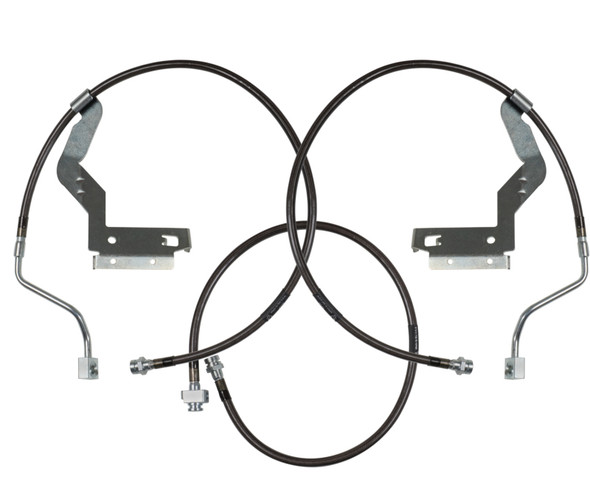

Carli 05-07 Ford F250/350 SD Hardware Braided Brake Lines 4.5in System - CS-FORDBBL-05
Carli
$222.00What vehicles are these brake lines compatible with?These Carli brake lines are specifically designed for 2005-2007 Ford F-250 Super Duty and F-350 Super Duty trucks.Do these brake lines require any modification to install?Professional installation is...$222.00
Brake line kits are the direct link between your master cylinder and calipers — and the difference between a rubber OE hose that balloons under pressure and a stainless-braided line that delivers firm, consistent pedal feel at every braking zone. Motor Sport Mayhem stocks 478 brake line kits across 53 brands, from budget-friendly OE replacements to full race-spec stainless assemblies engineered for sustained high-temperature hydraulic performance.
Our Top Picks for Brake Line Kits
Every product below was selected based on engineering quality, real-world performance validation, and value within its category tier.
ALC Front Brake Kits
Alcon | $3,450.00
A complete front braking system pairing oversized rotors with multi-piston calipers for maximum thermal capacity and stopping force under extreme load.
- Race-proven Alcon hardware with direct-fit line routing designed to eliminate hydraulic flex at peak braking temperatures
ABR Caliper Rebuild Kits
All Balls Racing | $73.99
Restores full hydraulic integrity at the caliper end of the brake system, ensuring no pressure loss compromises line performance after rebuild.
- Comprehensive seal and hardware kit that pairs directly with upgraded brake line installations for a fully refreshed hydraulic circuit
AMS Brake Lines
AMS | $144.95
Four-line stainless steel braided kit that eliminates hose expansion under hard braking, delivering a direct, fade-resistant pedal feel for street and track use.
- PTFE inner liner with stainless braid outer jacket rated for sustained hydraulic pressure well above OE rubber hose burst thresholds
ART ABS Kits
Artec Industries | $98.99
Maintains ABS sensor signal integrity when upgrading axle components, ensuring the hydraulic brake circuit communicates correctly with the vehicle's anti-lock system.
- Precision-tooth tone ring engineered to preserve correct wheel speed sensor readings after axle swaps or brake line re-routing
BKM Brake Rotors
BikeMaster | $264.99
Precision-machined rotor that serves as the thermal load anchor for the entire brake hydraulic circuit, ensuring line pressure translates to consistent clamping force.
- Dimensionally matched to OE caliper brackets so upgraded brake lines route cleanly without kinking or excess slack
BKC Brake Caliper
Bikers Choice | $399.99
Direct-fit caliper replacement that restores correct hydraulic inlet positioning so aftermarket brake lines connect without angle adapters or flow restrictions.
- OE-matched banjo bolt inlet sizing ensures compatibility with standard braided line end fittings across all major line kit brands
BX Brake Master Cylinders
BLOX Racing | $124.80
The hydraulic origin point of your brake line system — a properly sized master cylinder ensures the upgraded lines downstream actually deliver the pedal pressure they're rated for.
- Bore diameter matched for non-ABS circuit configurations, preventing pressure drop that undermines stainless line performance gains
BMR Brake Kits for Conversions - D&S
BMR Suspension | $1,339.95
A full brake conversion system where line routing, caliper position, and rotor diameter are engineered together — eliminating the hydraulic geometry compromises of piecemeal upgrades.
- Conversion-specific brake line routing eliminates the stress points and tight-radius bends that cause premature line fatigue on adapted OE systems
BRB Big Brake Kits
Brembo | $1,995.00
Brembo's GT big brake platform integrates caliper, rotor, and line routing as a single engineered system, extracting maximum hydraulic efficiency from every component in the circuit.
- Factory-validated brake line routing included with the system ensures no hydraulic dead volume between master cylinder and 4-piston caliper inlets
BRE OE Equivalent Rotors
Brembo OE | $1,798.75
OE-specification Brembo hardware that maintains factory hydraulic line geometry and pressure ratings while restoring brake system performance to original engineering intent.
- Factory-matched inlet port dimensions ensure OE and aftermarket brake lines seat correctly without requiring adapter fittings that introduce leak points
How to Choose the Right Brake Line Kits
The single most important variable in a brake line kit is expansion under pressure. OE rubber hoses are designed to meet minimum DOT FMVSS 106 standards — they work, but they absorb hydraulic energy through hose wall expansion before that pressure ever reaches the caliper piston. Stainless steel braided lines with a PTFE inner liner eliminate that compliance entirely, transferring hydraulic pressure directly into clamping force. The result is measurable pedal firmness improvement without any change to brake pads, rotors, or fluid. Where a kit fails is typically at the end fittings: poorly crimped or improperly swaged banjo bolts and inverted flare connections introduce leak points, pressure loss, and eventual failure under thermal cycling. Every kit you consider should specify fitting construction method, pressure rating, and DOT compliance status clearly.
Key Specifications
Inner liner material is the foundational spec. PTFE (polytetrafluoroethylene) is the industry standard for performance applications — it's chemically inert to all DOT 3, DOT 4, DOT 5.1, and DOT 5 fluids, maintains flexibility across a temperature range from roughly -65°F to 450°F, and has a near-zero permeation rate that prevents fluid vapor migration through the line wall. Rubber-lined stainless kits exist at lower price points, but the liner degrades faster under high-temperature track use and can absorb fluid over time, softening pedal feel. For any application beyond daily street driving, PTFE is the correct choice.
Outer jacket construction matters for durability and abrasion resistance. Single-layer stainless braid handles street and occasional track use; dual-layer braid is appropriate for sustained competition where lines may contact bodywork, frame rails, or suspension components under flex. Some kits add a clear or colored PVC overcoat over the braid — this protects the stainless from corrosion in road salt environments and preserves appearance, but adds minimal burst strength. Verify that the overcoat doesn't obscure the braid for inspection purposes, which can be a problem on lines routed through difficult areas.
Fitting geometry is application-specific and non-negotiable. Banjo bolt end fittings, inverted flare (bubble flare) connections, and NPT threaded ends are not interchangeable without adapters — and every adapter in a brake hydraulic circuit is a potential failure point. Measure your OE line end fittings or cross-reference by application before purchasing. Thread pitch also matters: metric and SAE thread pitches are often close enough to start threading but will cross-thread and leak under pressure. Quality kits specify thread pitch explicitly for every end connection.
Line length and routing flexibility determine whether a kit is truly a direct fit or a fabrication project. Full vehicle kits typically include front and rear lines plus any intermediate hard-line-to-flex connections, pre-cut and terminated to OE routing paths. Partial kits targeting only the flexible sections nearest calipers are simpler to install but leave OE hard lines in service — acceptable for street use, less ideal where the entire hydraulic circuit has been replaced during a conversion or big brake upgrade. When upgrading to larger calipers as part of a complete brake system build, verify that new line lengths account for any caliper bracket offset changes that shift the inlet port position.
Brake Line Specification Guide by Application
| Application | Recommended Line Type | Minimum Burst Pressure | End Fitting Standard |
|---|---|---|---|
| Daily Street / OE Replacement | Rubber DOT 106 or entry stainless braid | 1,500 psi | OE-match banjo or inverted flare |
| Street Performance / Weekend Spirited | Stainless braid, PTFE liner, PVC overcoat | 2,500 psi | Banjo bolt, metric or SAE per application |
| Track Day / Autocross | Stainless braid, PTFE liner, no overcoat for inspection | 3,000 psi | AN fitting or banjo with safety wire provision |
| Endurance Racing / Competition | Dual-layer stainless braid, PTFE liner, heat sleeve at caliper | 4,000+ psi | AN -3 or -4 with swaged or reusable AN ends |
| Lifted / Off-Road / Suspension-Extended | Extended-length stainless braid, flexible routing | 2,500 psi | Banjo bolt with extended length to clear knuckle travel |
| Motorcycle / Powersports | Stainless braid, PTFE liner, single-line front kit | 2,000 psi | Banjo bolt, 10mm or 12mm per caliper spec |
Price Guide
Entry ($0.20–$138): This tier covers individual replacement fittings, single-line OE-spec rubber replacements, and basic stainless upgrade lines for light-duty applications. You're getting functional hydraulic hardware that meets DOT minimums — suitable for restoring a deteriorated OE system or upgrading a single flex section. Don't expect race-grade end fitting construction or extended thermal ratings at this price point, but for daily driving these lines perform the job reliably.
Mid-range ($138–$500): The majority of performance enthusiasts land here for good reason — this range covers complete 4-line stainless PTFE kits for street and track use, partial brake system upgrades, and powersports-specific multi-line kits. End fitting quality improves meaningfully, PTFE liners become standard, and application-specific fitment is better validated. This is the tier where pedal feel improvement over OE rubber is most clearly felt on a daily-driven performance car.
Premium ($500–$3,743.73): Complete brake system conversions, big brake kit packages with integrated line routing, and race-specification hydraulic assemblies built to FIA or SCCA compliance standards occupy this tier. The cost reflects engineered systems where line routing, caliper positioning, master cylinder sizing, and rotor diameter are validated as a unit — not assembled from separate components. For dedicated track cars, time attack builds, or high-output tow vehicles where brake system integrity is a safety-critical engineering requirement, this investment is justified and often necessary.
Who Is This For?
Brake line kits serve a wider range of builders than almost any other brake component — from commuters chasing OE reliability to endurance racers demanding zero hydraulic compliance under sustained 200°F fluid temperatures.
Street Performance — 8.3/10
This is the highest-scoring use case in our catalog and the most common reason enthusiasts upgrade from OE rubber lines. Stainless braided kits deliver an immediately noticeable improvement in pedal firmness and modulation on a street-driven performance car — the kind of tactile feedback that makes threshold braking more intuitive and predictable. At 8.3 out of 10, this category earns near-top marks here because the upgrade is direct, measurable, and permanent without any maintenance trade-off. Pair upgraded lines with quality performance brake pads to realize the full benefit of reduced hydraulic compliance.
Track / Autocross — 7.8/10
At 7.8 out of 10, track and autocross applications score high because consistent hydraulic pressure delivery becomes genuinely critical during repeated hard braking events. OE rubber lines that feel acceptable on the street begin to exhibit pedal variation lap over lap as fluid temperatures rise and hose walls soften — stainless PTFE lines eliminate that variable entirely. For autocross specifically, where braking zones are short and precise threshold control determines corner entry speed, the pedal consistency improvement translates directly to tighter, more repeatable lap times.
Racing Competition — 7.5/10
Dedicated competition builds score 7.5 out of 10 because at this level, brake line specification becomes a technical regulations and safety issue as much as a performance one — many sanctioning bodies mandate stainless braided lines or prohibit rubber OE lines outright above certain competition classes. Race-spec kits with dual-layer braid, heat sleeves near caliper inlets, and AN-terminated ends handle the sustained thermal and pressure cycling of endurance and sprint racing without degradation. The slightly lower score relative to street performance reflects the reality that at the competition level, brake lines are table stakes — every competitive car runs them, and the differentiation comes from the full hydraulic system design around them.
Easy DIY Install — 7.4/10
A 7.4 out of 10 DIY score reflects the fact that complete vehicle-specific brake line kits — pre-cut, pre-terminated, and application-matched — are genuinely straightforward bolt-on installs for a mechanically capable home builder. No cutting, no flaring, and no specialized tooling is required when you purchase a properly spec'd direct-fit kit. The main procedural requirements are correct brake bleeding sequence after installation and torquing banjo bolts to specification — typically 20–25 ft-lb for most passenger vehicle applications. Anyone comfortable with basic brake work can execute this upgrade in an afternoon.
Heavy Towing — 7.0/10
Towing applications score 7.0 out of 10 because the thermal and pressure demands on brake lines under sustained downhill grades with loaded trailers are substantial and underappreciated by most builders. OE rubber lines on high-GVWR applications degrade faster from heat cycling, and pedal sponge under extended braking is a real safety concern when stopping momentum significantly above the vehicle's unloaded design weight. Upgraded stainless lines rated to higher burst pressures provide a meaningful safety margin and maintain consistent pedal feel even during repeated heavy braking events — a worthwhile upgrade for any truck or SUV regularly operating at or near tow capacity.
Trusted Brake Line Kits Brands We Carry
The brands that dominate this category have earned their position through engineering depth, material transparency, and real-world validation across street and competition applications. AMS Performance produces application-specific stainless PTFE kits with well-documented pressure ratings and clean end fitting construction validated on high-output platform builds. Wilwood brings professional motorsport hydraulic engineering to both brake conversion hardware and line routing, with system-level thinking that treats lines as part of a complete hydraulic circuit rather than standalone components. Brembo — both its OE-supply and aftermarket GT divisions — sets the benchmark for caliper-to-line interface geometry, with inlet specifications that ensure aftermarket lines connect without flow restriction or fitting compromise. Stoptech rounds out the track-focused end of the spectrum with stainless line kits developed alongside their big brake systems for validated fitment. Artec Industries addresses the critical overlap between brake line integrity and ABS system compatibility in suspension-modified builds, where tone ring and sensor alignment directly affects how the ABS module interprets hydraulic pressure events. BMR Suspension approaches brake line routing as a conversion engineering problem — specifying line geometry as part of complete brake upgrade packages rather than leaving routing as an afterthought. Across all these brands, the common thread is documented material specifications and application validation — the minimum standard for any hydraulic brake component.
Frequently Asked Questions
Are aftermarket brake calipers any good?
Aftermarket brake calipers from established manufacturers are not only good — they frequently outperform OE units in thermal capacity, piston material, and bore sizing for performance applications. The key distinction is manufacturer tier: brands that supply to professional motorsport or hold OE supply contracts (such as Brembo, Wilwood, or Alcon) produce calipers built to tighter dimensional tolerances and better sealing standards than low-cost catalog replacements. For a caliper to integrate correctly with an upgraded brake line kit, the hydraulic inlet port thread specification and banjo seating surface must be precise — a poorly cast aftermarket caliper can leak or restrict flow even with a quality line attached. Buy from brands that publish caliper bore diameter, piston material, and operating temperature ratings explicitly.
Are aftermarket master cylinders good?
Aftermarket master cylinders are effective when correctly matched to the brake circuit they're feeding — and that matching is where most failures occur. Master cylinder bore diameter directly determines the pressure-to-pedal-travel ratio: a larger bore generates more volume per stroke (better for big brake kit pistons) but requires more pedal force, while a smaller bore increases line pressure per unit of pedal input but reduces caliper piston travel. The upgrade is genuinely worthwhile when switching from a rubber line system to full stainless braided — the elimination of hose expansion means the master cylinder's full pressure output reaches the calipers, which can feel like a completely different pedal with the same cylinder. Verify bore diameter compatibility with your caliper piston area before purchasing.
Are ABS tone rings magnetic?
Yes — passive ABS tone rings are ferromagnetic steel that interrupt the magnetic field of a stationary Hall-effect or variable reluctance wheel speed sensor as each tooth passes the sensor tip, generating the AC voltage signal the ABS module reads as wheel speed. Active tone rings use a magnetized rubber encoder ring (typically bonded to a bearing seal) that alternates north-south poles and works with Hall-effect sensors to produce a digital square wave signal — these are not magnetic in the traditional sense but carry embedded magnetic polarity. When replacing or upgrading tone rings as part of a brake or axle conversion, tooth count must match the original specification exactly — changing from a 48-tooth to a 60-tooth ring will alter the sensor pulse frequency and cause the ABS module to misinterpret wheel speed, triggering fault codes or disabling ABS function entirely. Always verify tooth count against the OE specification for your ABS module calibration.
Are black coated rotors worth it?
Black coated rotors — typically zinc or e-coat finished on the hat, vanes, and non-swept rotor face — are worth it specifically for corrosion resistance and appearance, not for thermal or friction performance. The coating prevents the aggressive rust that forms on bare iron rotors during storage, shipping, and the first few hundred miles before the friction surface breaks in — eliminating the pulsation and noise that often accompanies new rotor installation on corrosion-prone vehicles. The swept braking surface itself is never coated on a functional performance rotor, so the coating has zero effect on pad bite, heat dissipation, or stopping distance. For a vehicle that sits between track days or lives in a salt-belt climate, the coating provides real practical value; for a car that drives daily, the friction surface would wear the coating off the swept area within the first week regardless.
Are backing plates necessary on a brake system?
Backing plates — the stamped steel dust shields behind rotors — are technically optional for brake function but serve three legitimate roles: they deflect road debris and water away from rotor and pad surfaces, provide a partial heat shield protecting wheel bearing seals from rotor radiant heat, and in drum brake systems, they're structural components the wheel cylinder and shoes mount to. On dedicated track builds, backing plates are commonly removed to improve airflow to rotor vanes, which can meaningfully reduce sustained rotor temperatures on cars with aggressive brake cooling requirements. For street use or heavy towing applications, retaining them is the correct choice — the debris and moisture protection they provide extends rotor, pad, and bearing service life more than the marginal cooling improvement from removal justifies. If you're upgrading to a big brake kit or rotor diameter conversion, verify that OE backing plates clear the new rotor hat diameter before assuming they can be retained.
Building something specific? Our performance specialists can help you select the right Brake Line Kits for your application — street, track, or full race build.