
Brakes, Rotors & Pads
- Product
- Qty in Cart
- Quantity
- Price
- Subtotal
-
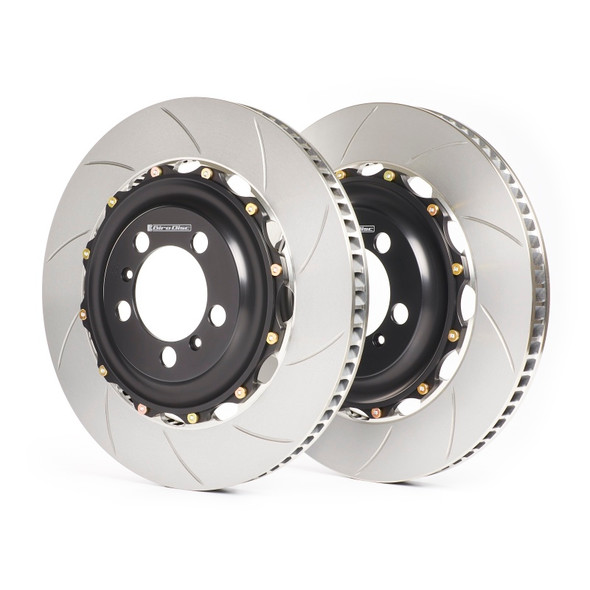
GiroDisc Porsche 911 GT3/GT3RS/GT2RS (991 Excl PCCB) Slotted Rear Rotors - A2-146
GiroDisc
$1,750.00GiroDisc Porsche 911 GT3/GT3RS/GT2RS (991 Excl PCCB) Slotted Rear Rotors$1,750.00 -
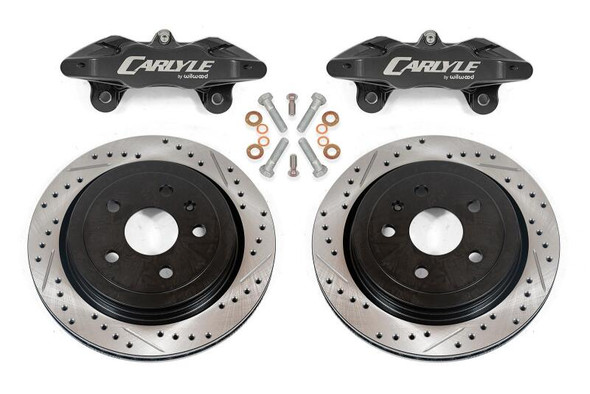
BMR 14-19 Chevrolet Corvette C7 Brake Kit For 15in Conversion Drilled & Slotted Rotors Black Caliper - DBK572
BMR Suspension
$1,339.95Do these brake kits fit my vehicle?These BMR Brake Kits are specifically engineered for the 14-19 Chevrolet Corvette C7, ensuring a precise and powerful upgrade.Is professional installation recommended for these brake kits?Professional installation is...$1,339.95 -

Wilwood Narrow Superlite 4R Rear Kit 12.88in Drilled Red 2012-Up Toyota / Scion FRS w/Lines - 140-12871-DR
Wilwood
MSRP: $2,479.08$2,213.46Will this big brake kit fit my 2015 Subaru BRZ?Yes, this Wilwood Superlite Brake Kit is engineered for a precise fitment on 2013-2017 Scion FR-S and Subaru BRZ models.Is professional installation required for this big brake kit?Professional installation...MSRP: $2,479.08$2,213.46 -

Wilwood 03-05 Dodge Neon SRT-4 Forged Dynapro 6 Big Brake Front Brake Kit 12.19 - Red - 140-16827-DR
Wilwood
MSRP: $1,410.93$1,259.76Will this big brake kit fit my vehicle?Confirm precise vehicle fitment for this big brake kit using our detailed application guide before proceeding with installation.Can I install this big brake kit myself?Professional installation is recommended for...MSRP: $1,410.93$1,259.76 -

GiroDisc 12-17 Mercedes-Benz SL63 (R231 Excl CCM) Slotted Rear Rotors - A2-148
GiroDisc
$1,450.00What is the main benefit of slotted rotors?Slotted rotors expel gases and debris, improving pad contact for superior stopping power and consistent performance.Are slotted rotors suitable for daily driving?These GiroDisc slotted rotors are engineered for...$1,450.00 -
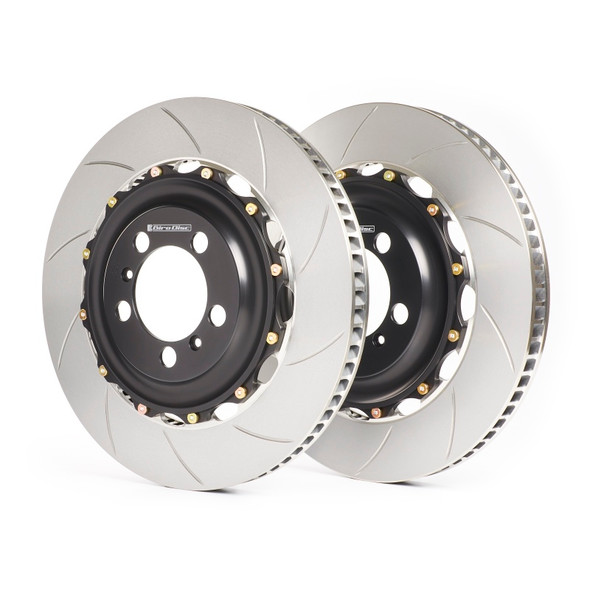
GiroDisc Porsche Boxster Spyder (981) Slotted Rear Rotors - A2-049B
GiroDisc
$1,350.00How do I know if these rotors will fit my car?Confirm rotor fitment with your specific vehicle's make, model, and year to ensure precise compatibility before installation.Are these rotors easy to install?Professional installation is strongly recommended...$1,350.00 -
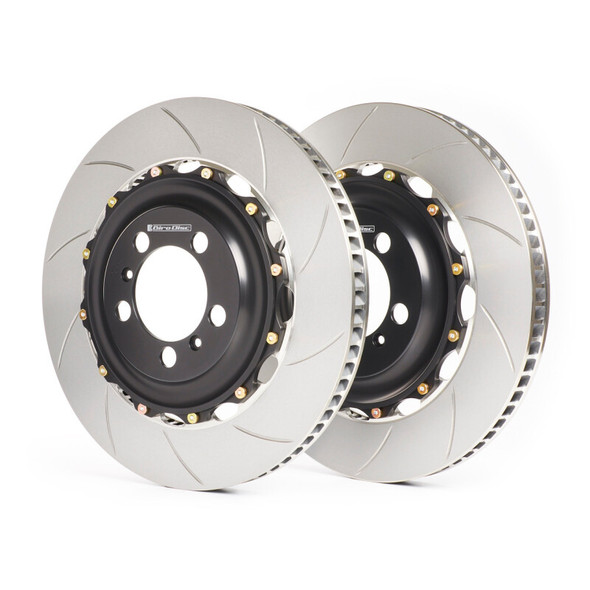
GiroDisc 2006 Mercedes-Benz CLS55 (W219 w/o P30 Package) Slotted Front Rotors - A1-308
GiroDisc
$1,350.00What is the recommended brake fluid for GiroDisc rotors?GIR Slotted Rotors perform optimally with high-temperature brake fluid, ensuring consistent performance during aggressive driving and preventing fluid degradation.Are these rotors compatible with my...$1,350.00 -
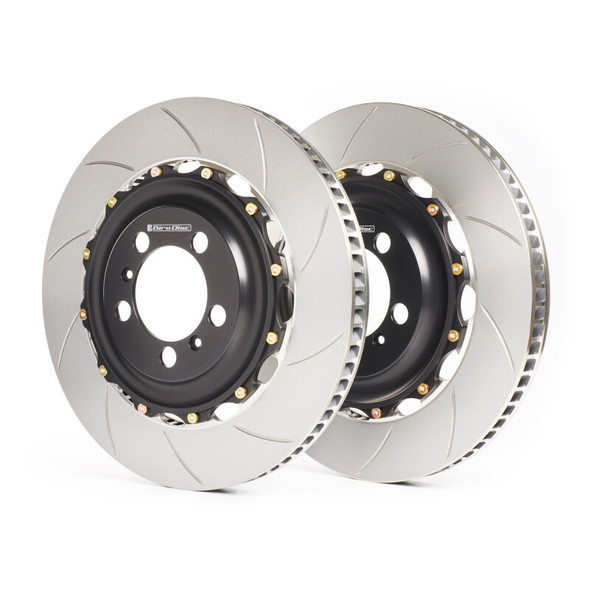
GiroDisc BMW F8X M2/M3/M4 (w/AP/Essex BBK 372x36mm Rotors) 2-Piece Slotted Front Rotors - A1-194
GiroDisc
$1,450.00Will these rotors fit my car?Confirm precise fitment with your specific vehicle application before purchase to ensure optimal compatibility and performance.Can I install these myself?Professional installation is strongly recommended for these...$1,450.00 -
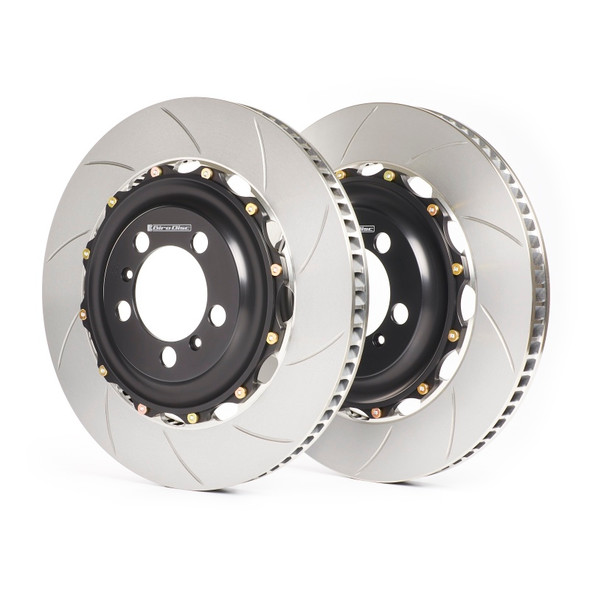
GiroDisc 2016+ Dodge Viper ACR Gen 5 (w/CCM) Slotted Front Rotors - A1-165
GiroDisc
$1,700.00How do I know if these rotors will fit my car?Confirm fitment with your specific vehicle's make, model, and year before purchasing these Slotted Rotors for optimal compatibility.Do these rotors require special installation?Professional installation is...$1,700.00 -

Wilwood Narrow Superlite 6R Front Hat Kit 12.88in 1994-2004 Mustang - 140-9107
Wilwood
MSRP: $2,414.40$2,155.71How long does it take to install the Wilwood Superlite Brake Kit on my 1994-2004 Ford Mustang?Wilwood Superlite Brake Kits offer simplified installation for your 1994-2004 Ford Mustang, typically requiring just a few hours for a confident bolt-on upgrade...MSRP: $2,414.40$2,155.71 -
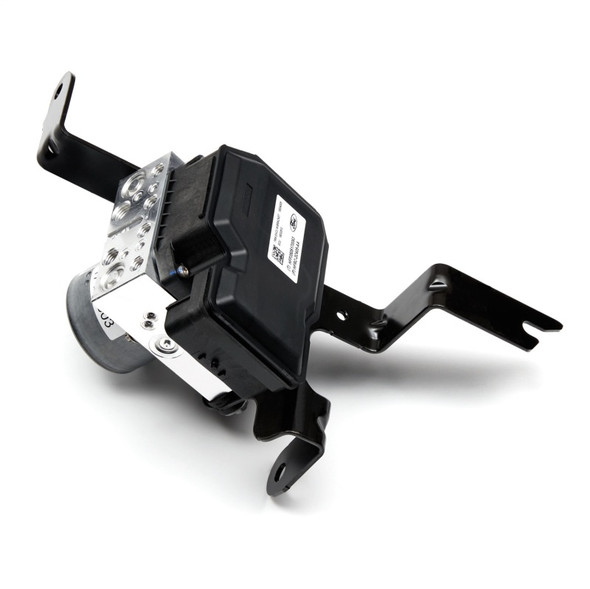
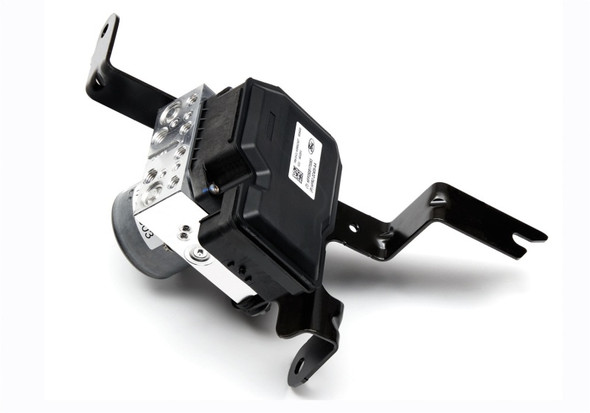
Ford Racing FP350S ABS Module w/ Bracket - M-2353-D
Ford Racing
$1,303.55Can I install this ABS module on my stock Mustang?This Ford Racing ABS Module is engineered for race-only applications, confirming specific fitment with your vehicle is essential for optimal performance.What is the recommended installation for this ABS...$1,303.55 -

Brembo 12-16 FRS Exc w/ Elec Park Brake Rr GT BBK 2 Pis Cast 2pc 316 x20 1pc Rtr Slot Type1-Gold - 2E5.5003A4
Brembo
$1,995.00Does Brembo offer Big Brake Kits that fit my specific vehicle?Brembo Big Brake Kits are engineered for precise vehicle fitment; always confirm compatibility for your specific make and model to ensure optimal performance.How do I install a Brembo Big...$1,995.00
Brakes, rotors, and pads are the most safety-critical performance components on any vehicle — and the right combination determines stopping distance, fade resistance, rotor longevity, and pedal feel under everything from daily commuting to sustained track abuse. Motor Sport Mayhem stocks 9,843 in-stock brake components across every performance tier, from entry-level OE-equivalent rotors to full multi-piston big brake conversions engineered for competition.
Our Top Picks for Brakes, Rotors & Pads
These products were expert-selected across multiple price points and use cases based on engineering quality, real-world stopping performance, and proven results on the street and at the track.
ALC Front Brake Kits
Alcon | $3,450.00
A race-derived 6-piston caliper and oversized rotor package delivering the clamping force and thermal capacity required for high-performance truck applications.
- 6-piston monoblock caliper design maximizes piston area and eliminates flex for consistent pedal feel under repeated high-load stops
ABR Caliper Rebuild Kits
All Balls Racing | $73.99
A complete caliper rebuild solution that restores hydraulic integrity and piston seal performance to factory-or-better spec without full caliper replacement cost.
- Includes all seals, dust boots, and hardware needed for a full caliper overhaul — ideal for powersports applications where replacement calipers are scarce
AMS Brake Lines
AMS | $144.95
Stainless steel braided brake lines eliminate the expansion inherent in rubber OEM lines, translating directly into a firmer, more consistent pedal under hard braking.
- PTFE inner liner resists brake fluid degradation at elevated temperatures, maintaining hydraulic response even on track where fluid temps spike
ART ABS Kits
Artec Industries | $98.99
A complete ABS tone ring solution that restores proper wheel speed sensing after axle swaps or heavy-duty upgrades where the factory ring no longer fits.
- 52-tooth ring matches OEM ABS module pulse requirements, ensuring accurate speed signal and full ABS/traction control functionality post-conversion
BKM Brake Rotors
BikeMaster | $264.99
A high-quality replacement rotor engineered to OE dimensional tolerances for powersports applications where consistent bite and warp resistance are essential.
- Precision machined friction surfaces meet tight parallelism tolerances that prevent pedal pulsation and uneven pad wear over the rotor's service life
BKC Brake Caliper
Bikers Choice | $399.99
A direct OE-replacement caliper for classic heavy cruisers that restores proper hydraulic clamping force with correct geometry and a period-correct black finish.
- Drop-in fitment to original mounting points eliminates the fabrication and line-rerouting hassles common with generic aftermarket caliper substitutions
BX Brake Master Cylinders
BLOX Racing | $124.80
A performance-spec master cylinder that improves brake feel and fluid displacement for builds where the OEM unit limits pedal responsiveness or is worn beyond service limits.
- Bore sizing matched to the OEM hydraulic circuit ensures compatible fluid volume displacement without requiring proportioning valve recalibration
BMR Brake Kits for Conversions - D&S
BMR Suspension | $1,339.95
A complete drilled-and-slotted rotor and caliper conversion kit engineered for larger wheel fitments where brake diameter must scale up to maintain proper caliper clearance and thermal performance.
- Drilled and slotted rotor faces accelerate gas and debris evacuation under sustained braking, directly reducing the fade threshold compared to a solid OEM rotor
BRB Big Brake Kits
Brembo | $1,995.00
A Brembo GT-series big brake kit combining a 4-piston cast caliper with a two-piece slotted rotor for a significant upgrade in clamping force, rotor mass, and heat dissipation capacity.
- Two-piece rotor construction isolates the hat from the friction ring, allowing differential thermal expansion without the warping risk inherent in one-piece designs at sustained track temperatures
BRE OE Equivalent Rotors
Brembo OE | $1,798.75
An OE-specification front brake disc kit from the same supplier that built the factory system, ensuring identical metallurgy, dimensions, and performance to the original engineering intent.
- OEM-supplier provenance guarantees correct rotor thickness, hat height, and vane geometry — critical on high-performance vehicles where the factory brake system is already heavily optimized
How to Choose the Right Brakes, Rotors & Pads
The brake system is a thermal management problem first and a friction problem second — every pad compound, rotor metallurgy decision, and caliper piston count has to be matched to the heat cycles the specific application generates. A street pad that feels excellent in daily driving will glaze and lose friction coefficient within two laps of a track session; a full-race compound requires 300°F+ of rotor temperature to hit its performance window and will feel wooden and unpredictable at cold street temperatures. Getting the match wrong costs you either stopping power or pad and rotor longevity, and in track scenarios, it costs you lap time and safety margin.
Key Specifications
Rotor diameter and thickness are the first numbers to understand. Larger diameter rotors increase the lever arm against which the caliper clamps, improving mechanical advantage without requiring higher hydraulic pressure. Rotor thickness defines heat storage capacity — a thicker rotor can absorb more energy before surface temperature destabilizes the pad compound. Always verify the minimum discard thickness stamped on your existing rotors before assuming a direct replacement is sufficient; a worn rotor past spec will warp under repeated hard stops regardless of pad quality.
Pad compound selection should be driven by operating temperature range, not marketing language. Compounds are rated by their effective temperature window — a street performance compound might operate cleanly from 100°F to 900°F, while an endurance racing compound needs 400°F–1,400°F to maintain consistent friction coefficient. Metallic and semi-metallic compounds offer excellent high-temperature performance but increase rotor wear and can generate NVH at low temperatures. Ceramic compounds reduce dust and noise but typically sacrifice ultimate bite at peak temperatures. NAO (Non-Asbestos Organic) formulations are softer on rotors but have lower thermal ceilings — appropriate for street use, not track.
Caliper piston count and piston area directly determine clamping force and pad contact pressure distribution. A single-piston sliding caliper applies force from one side and relies on the caliper body to float and equalize pressure — adequate for most street applications but limited under sustained load. Multi-piston fixed calipers apply equal, simultaneous force from both sides of the rotor, improving pad wear consistency and reducing the pedal travel required to achieve full clamp. Caliper body stiffness matters as much as piston count — a flex-prone caliper will absorb pedal input that should be translated into clamping force, producing a spongy pedal feel even with perfectly bled fluid.
Brake line material is frequently overlooked but has a measurable impact on pedal feel. OEM rubber brake lines expand slightly under hydraulic pressure, absorbing fluid volume that should be moving caliper pistons — the effect is a softer, less progressive pedal, particularly noticeable as rubber ages and becomes more compliant. Stainless steel braided lines with PTFE inner liners eliminate this expansion, sharpening initial pedal response and reducing the total pedal travel needed to achieve target deceleration. For any build that sees track use or performance street driving, upgraded brake lines are one of the highest return-on-investment modifications in the entire brake system.
Rotor Diameter vs. Recommended Caliper Piston Count & Application
| Rotor Diameter | Recommended Min. Piston Count | Typical Application | Thermal Capacity (approx.) |
|---|---|---|---|
| 255–280mm | 1–2 piston | Compact cars, light powersports, daily street | Low — adequate for normal street cycles |
| 281–305mm | 2–4 piston | Mid-size street performance, light autocross | Moderate — handles occasional spirited driving |
| 306–330mm | 4 piston | Sport sedans, HPDE, heavy street performance | High — suitable for track days with proper pads |
| 331–355mm | 4–6 piston | Track-prepped cars, heavy-duty performance trucks | Very High — sustained multi-lap track sessions |
| 356–380mm+ | 6–8 piston | Dedicated race vehicles, high-mass performance builds | Extreme — endurance racing, repeated threshold braking |
Price Guide
Entry ($45.53–$150): This range covers OE-equivalent rotors, organic and semi-metallic street pad sets, caliper rebuild kits, and individual brake hardware components. Quality varies significantly at this price point — established brands with proven metallurgy are worth the few extra dollars over generic imports. Appropriate for daily drivers staying on public roads with no track exposure.
Mid-range ($150–$600): The sweet spot for the majority of performance enthusiasts — where you find performance pad compounds, slotted or drilled-and-slotted rotor upgrades, stainless brake lines, and entry-level multi-piston caliper upgrades. Most street performance and occasional track-day builds live in this range. The improvement in pedal feel, fade resistance, and rotor longevity over budget options is substantial and immediately noticeable.
Premium ($600–$1,664.96): Full big brake kits, multi-piston racing calipers, two-piece floating rotors, and OEM-supplier replacement systems for high-performance vehicles. The cost is justified when the factory brake system is the limiting factor in repeated hard stops, when wheel sizing requires a larger rotor diameter, or when consistent lap-time performance under thermal stress is the objective. This is not a vanity purchase — at this level, every dollar buys measurable engineering.
Who Is This For?
Brake system upgrades span a wider range of real-world applications than almost any other performance category — from weekend autocross competitors to daily commuters chasing better pedal feel to off-road builders restoring ABS function after axle conversions.
Street Performance — 8.3/10
Street performance is the highest-scoring application in this category for good reason: the gap between OEM brake performance and a quality aftermarket setup is immediately felt on public roads, and the upgrades don't require any compromise in daily drivability. Performance pad compounds with a broader temperature operating range, slotted rotors that clear debris and gas more aggressively, and stainless lines that sharpen pedal response all translate directly into shorter stopping distances and better driver confidence. This is the application where the category's 9,843-product depth matters most — fitment options exist for virtually every platform.
Track / Autocross — 7.8/10
Track and autocross use places demands on brake systems that expose the thermal limitations of street-spec components within minutes. Repeated threshold braking generates rotor surface temperatures that can exceed 1,000°F, which glazes street pads, boils DOT 3 brake fluid, and warps rotors not engineered for sustained heat cycles. Scoring a strong 7.8/10 here reflects the availability of purpose-designed track compounds, motorsport-grade rotors, and big brake solutions that push the thermal ceiling high enough for sustained competition use. Brake fluid upgrades — DOT 4 or DOT 5.1 with higher wet boiling points — should accompany any track-focused pad and rotor selection.
Racing Competition — 7.5/10
Full competition use demands the narrowest, most specialized selection in the category — compounds optimized for a specific temperature window dictated by track layout and vehicle weight, rotors selected for mass and vane geometry to hit target cooling rates between braking zones, and calipers stiff enough to maintain consistent piston travel across an entire stint. Scoring 7.5/10 at the competition level reflects the reality that genuine race brake components represent a smaller but highly curated portion of the overall catalog. Brands like Wilwood and Alcon are engineered specifically for this environment, with material specs and quality control standards that justify their position at the top of the price range.
Daily Driving Comfort — 6.4/10
A 6.4/10 score for daily driving comfort is an honest reflection of the tradeoff inherent in performance brake components — high-friction compounds generate more dust, more noise at cold temperatures, and occasionally more aggressive initial bite than the linear, quiet response most drivers expect in traffic. That said, this score also means there is meaningful selection available for drivers who want improved performance without sacrificing NVH or generating clouds of brake dust on clean wheels. Ceramic-based and advanced OE-replacement compounds from brands like Hawk Performance and Stoptech hit a comfortable middle ground for daily use with measurably better fade resistance than factory pads.
Heavy Towing — 7.0/10
Heavy towing imposes sustained, high-mass braking loads that are categorically different from performance driving — it's about consistent deceleration of elevated gross vehicle weights over long distances rather than peak friction at high temperatures. A 7.0/10 score reflects the availability of purpose-selected pads with high friction coefficients at the moderate temperatures generated by loaded downhill braking, along with upgraded rotors with higher thermal mass to absorb energy across longer braking events. Brake fade under towing conditions is a safety issue, not a performance issue, and the right compound and rotor combination has genuine, measurable consequences for vehicle control.
Trusted Brakes, Rotors & Pads Brands We Carry
The brands that dominate this category earned their position through engineering consistency, material quality, and application-specific product development rather than marketing spend. EBC leads our catalog by product count with over 4,100 SKUs, backed by decades of compound development spanning street, powersports, and motorsport applications — their color-coded compound system gives a clear, honest map of operating temperature ranges across the lineup. Wilwood is the benchmark for purpose-built race hardware, with monoblock caliper designs, aerospace-grade aluminum construction, and tolerances that hold up under endurance racing conditions. Brembo's dual presence in our catalog — as a premium aftermarket brand and as an OEM supplier — reflects the unique position they hold as the actual manufacturer of factory brake systems for many high-performance vehicles, meaning a Brembo OE replacement is the same component the vehicle was engineered around. Hawk Performance has built a strong reputation specifically in pad compound engineering, with friction materials developed and validated on actual racetracks. Stoptech brings a systems-thinking approach to brake engineering, designing rotors, pads, and lines to work as a matched set rather than selling individual components optimized in isolation. DBA (Disk Brakes Australia) rounds out the catalog with rotor designs — including their distinctive two-piece Kangaroo Paw vane geometry — engineered specifically for high-heat dissipation, backed by data from Australian motorsport competition.
Frequently Asked Questions
Are aftermarket brake calipers any good?
Quality aftermarket brake calipers from established manufacturers are not only good — in many cases they outperform OEM units in thermal tolerance, piston material quality, and clamping force consistency. The key distinction is manufacturer reputation and design intent: a caliper from a brand with motorsport engineering heritage is built to tighter tolerances and with higher-grade seals than a generic import sourced from an unknown foundry. For performance applications, a well-engineered aftermarket caliper with more pistons and a stiffer body will produce a measurably better pedal than a worn or sliding OEM unit. The risk lies in cheap, unbranded calipers where seal compound quality and bore tolerances are unknown — those are the units that seize, leak, or produce uneven pad wear within a single season.
Are aftermarket master cylinders good?
Aftermarket master cylinders are a legitimate performance upgrade when the OEM unit is either worn or undersized for a modified brake system. The master cylinder's bore diameter determines fluid displacement per millimeter of pedal travel — a larger bore moves more fluid per stroke, which suits big brake caliper upgrades with increased piston area, while a smaller bore can increase mechanical advantage and reduce pedal effort on lighter vehicles. Quality aftermarket units use the same anodized aluminum construction and precision-honed bores as OEM performance applications, and a fresh master cylinder on a high-mileage vehicle will restore crisp, consistent pedal feel regardless of pad or rotor condition. Always verify that bore sizing is compatible with your existing proportioning valve and caliper piston area before purchasing.
Are black coated rotors worth it?
Black coated rotors — typically zinc or geomet-coated on the hat, vanes, and non-friction surfaces — are worth it primarily for corrosion resistance and aesthetics, not outright braking performance. The coating prevents the rapid surface rust that forms on uncoated cast iron rotors within hours of exposure to moisture, which matters most on vehicles that sit outdoors or are used in wet climates. The friction surface itself is never permanently coated — it wears clean within the first few brake applications — so the coating has no effect on pad bite or stopping distances. Where coated rotors justify their modest price premium is in rotor longevity on the vanes and hat, where corrosion on an uncoated rotor can compromise structural integrity and create the surface rust that transfers to wheel faces as brown staining.
Are ABS tone rings magnetic?
Yes — passive ABS tone rings used in most traditional vehicle ABS systems are ferromagnetic, meaning they are made from magnetic-permeable steel that interacts with a fixed electromagnetic wheel speed sensor to generate the pulse signal the ABS module reads. As the tooth-and-gap pattern on the ring passes the sensor, it creates an alternating magnetic field that the sensor converts to a frequency signal — higher frequency equals higher wheel speed. Tooth count is critical: the ABS module is calibrated to a specific number of pulses per revolution, so a replacement ring must match the original tooth count exactly or the module will read incorrect wheel speeds and trigger fault codes or false ABS activation. Active systems using Hall-effect sensors and magnetic encoder rings operate on a different principle but are equally sensitive to ring specification — never substitute a ring without confirming full compatibility with the vehicle's ABS module calibration.
Are Akebono brakes better than OEM?
Akebono occupies a unique position in the brake market because they are OEM — they manufacture the original brake pads installed on the assembly line for a significant number of performance and luxury vehicles from major Japanese and North American automakers. Their Ultra-Premium ceramic compound formulation is engineered to match the noise, vibration, and harshness targets set by the vehicle manufacturer, which means an Akebono replacement pad is typically delivering the same friction profile, temperature range, and dust output the vehicle was designed around. For drivers prioritizing a quiet, low-dust, OEM-quality brake experience, Akebono is often the technically correct choice for a replacement. Where they are not the answer is track use or sustained performance driving — their compounds are optimized for street NVH targets, not peak friction coefficient at elevated temperatures, and competitors with higher-temperature compounds will outperform them in those conditions.
Building something specific? Our performance specialists can help you select the right Brakes, Rotors & Pads for your application — street, track, or full race build.