
Throttle Body Spacers
- Product
- Qty in Cart
- Quantity
- Price
- Subtotal
-

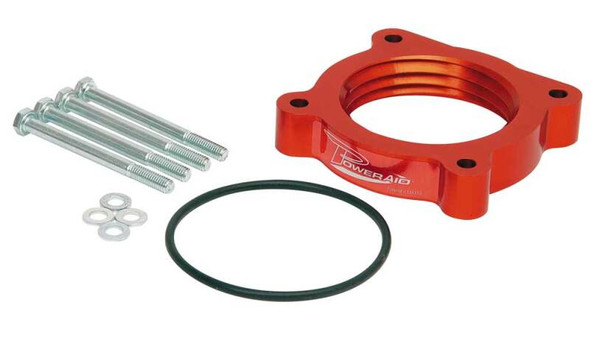
Airaid 04-13 Nissan Titan / Armada 5.6L 04-10 Infiniti QX-56 5.6L PowerAid TB Spacer- Black - 520-538
Airaid
MSRP: $157.99$154.24How do throttle body spacers work?AIR Throttle Body Spacers utilize a patented Helix Bore design to spin incoming air, boosting its velocity for more efficient combustion.How much horsepower does a throttle body spacer add?AIR Throttle Body Spacers...MSRP: $157.99$154.24 -
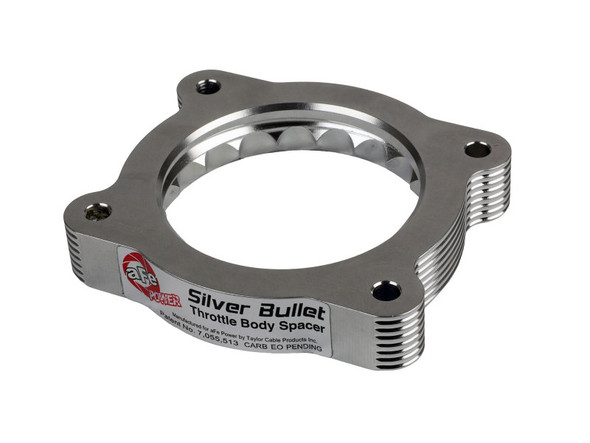

aFe 02-09 Chevrolet Trailblazer/ 02-09 GMC Envoy L6 4.2L Silver Bullet Throttle Body Spacer - Silver - 46-34022
aFe
$139.00What makes this throttle body spacer unique?The aFe Silver Bullet TBS uniquely combines serrated and helix designs to create optimal air turbulence for increased combustion chamber pressure.Will this throttle body spacer fit my vehicle?This bolt-on...$139.00 -

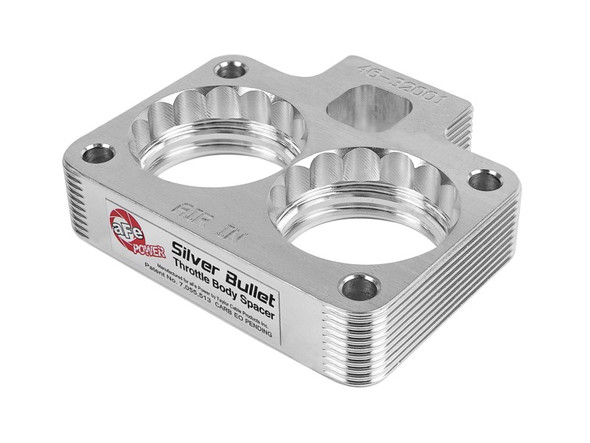
aFe Silver Bullet Throttle Body Spacers TBS Dodge Trucks 94-01 V8-5.2/5.9L - 46-32001
aFe
$139.00Will this throttle body spacer fit my truck?Confirm precise fitment for your specific vehicle before purchasing to ensure optimal compatibility and performance of this throttle body spacer.Is installation difficult?Professional installation of this...$139.00 -
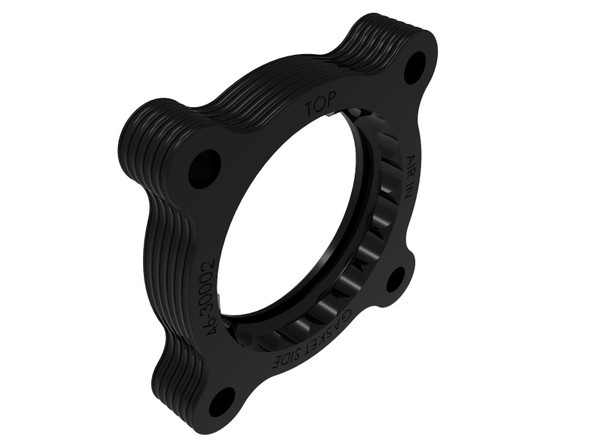
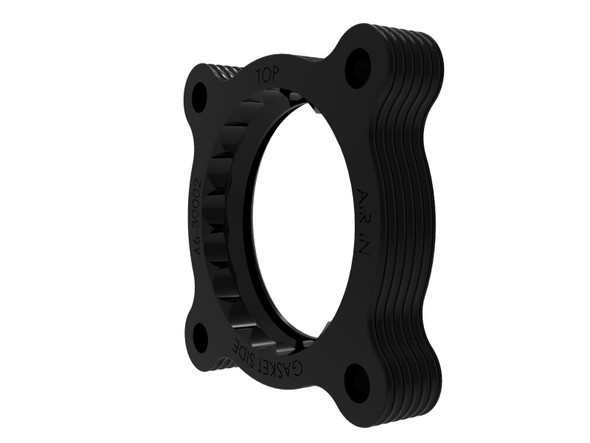
aFe Silver Bullet Throttle Body Spacers Mazda 3 14-18 L4-2.0L/2.5L - 46-30002
aFe
$139.00Does this throttle body spacer fit my 2014-2018 Mazda 3?Yes, the aFe Silver Bullet throttle body spacer is engineered specifically to fit the 2014-2018 Mazda 3 models.Is professional installation recommended for this throttle body spacer?Professional...$139.00 -


aFe 18-23 Volkswagen Atlas V6-3.6L Silver Bullet Throttle Body Spacer Kit - 46-39004
aFe
$139.00What vehicles does the aFe Silver Bullet Throttle Body Spacer fit?The aFe Silver Bullet Throttle Body Spacer is engineered specifically to fit 2018-2023 Volkswagen Atlas and Atlas Cross Sport models.How difficult is the installation of the aFe Silver...$139.00 -


aFe Silver Bullet Throttle Body Spacers TBS Dodge Ram 1500 03-07 V8-4.7L - 46-32004
aFe
$139.00Silver Bullet throttle body spacers create turbulence in the air flow at the point just prior entry into the engine increasing horsepower, torque and improving throttle response and fuel efficiency. Silver Bullet throttle body spacers are constructed...$139.00 -
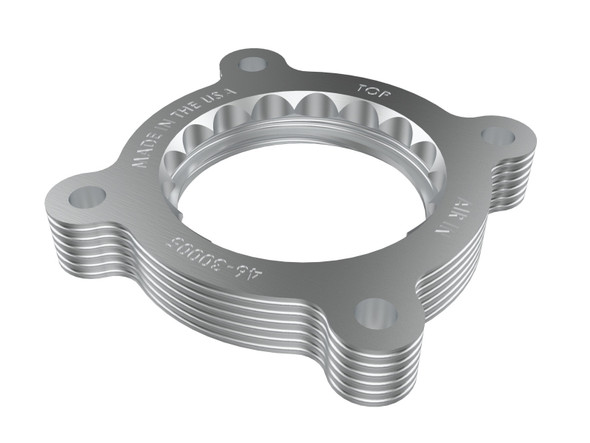

aFe 21-23 Subaru Crosstrek Silver Bullet Throttle Body Spacer Kit - 46-30005
aFe
$139.00What makes the aFe Silver Bullet Throttle Body Spacer unique?The aFe Silver Bullet Throttle Body Spacer features a unique serrated/helix combination design engineered to enhance airflow and reduce intake whistle.Will this Throttle Body Spacer improve my...$139.00 -

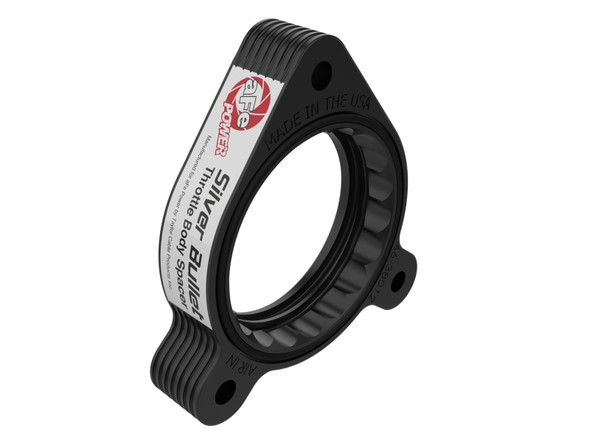
aFe Silver Bullet Throttle Body Spacer 19-21 Toyota Corolla L4 2.0L - Black - 46-38012B
aFe
$139.00What is the primary purpose of a throttle body spacer?Throttle body spacers optimize airflow into the intake manifold by creating beneficial turbulence, enhancing engine operation and responsiveness for your Lexus UX200 or Toyota Corolla.What kind of...$139.00 -
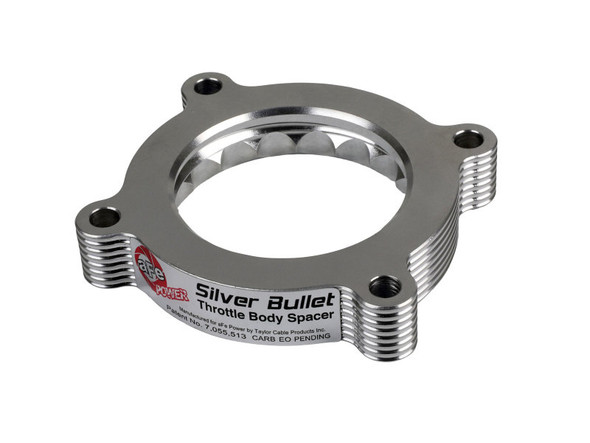
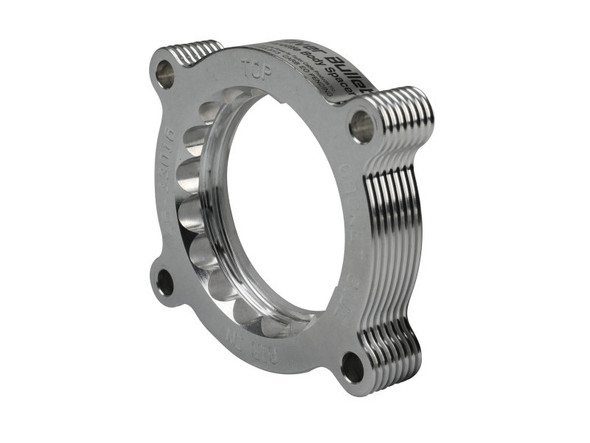
aFe 11-14 Ford Mustang/ 11-14 Ford F-150 V6 3.7L Silver Bullet Throttle Body Spacer - Silver - 46-33016
aFe
$139.00What is a throttle body spacer?A throttle body spacer is a mechanical device that bolts between the throttle body and intake manifold to improve airflow into the engine.Will a throttle body spacer void my warranty?Installing a bolt-on throttle body...$139.00 -
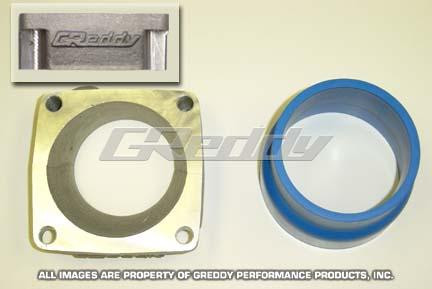

GReddy Nissan ECR33 Throttle Adapter - 13920450
GReddy
MSRP: $150.00$142.50What is the purpose of a throttle body spacer?Throttle body spacers optimize airflow into the engine, delivering smoother throttle response for more precise control and improved efficiency.How do I install a throttle body spacer?Professional installation...MSRP: $150.00$142.50 -

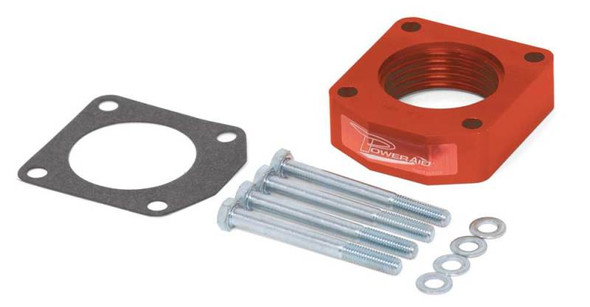
Airaid 03-09 Toyota Camry / 05-09 Scion TC 2.4L PowerAid TB Spacer - 510-608
Airaid
$146.99How easy is it to install this throttle body spacer?AIR Throttle Body Spacers offer an easy bolt-on installation, designed to fit seamlessly onto your 2003-2009 Scion tC/xB or Toyota Camry.What are the main performance benefits of installing a throttle...$146.99 -
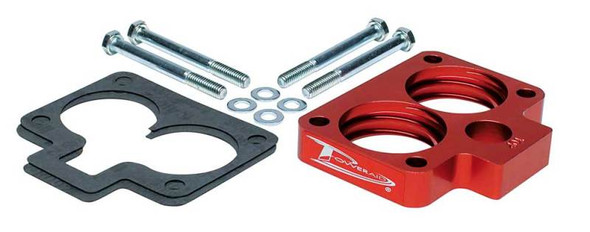
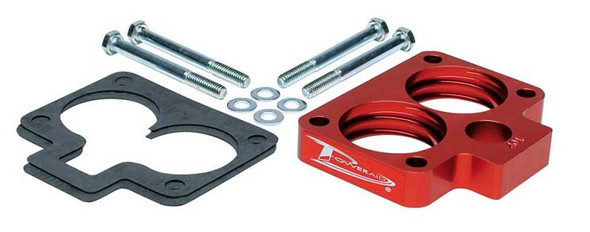
Airaid 97-03 Dakota/Durango 3.9/5.2/5.9L PowerAid TB Spacer - 300-570
Airaid
$146.99Will this AIR Throttle Body Spacer fit my vehicle?Verify fitment for your specific vehicle model before purchase to ensure optimal compatibility and installation of your AIR Throttle Body Spacer.How do I install the AIR Throttle Body Spacer?Installation...$146.99
Throttle body spacers are precision-machined or molded inserts that mount between the throttle body and intake manifold to increase plenum volume, improve air charge velocity, and in helix-bored designs, introduce a swirl effect that enhances fuel atomization and combustion efficiency. Motor Sport Mayhem stocks 112 throttle body spacers across 49 brands ranging from $4.95 to $4,012.37, covering everything from entry-level phenolic street spacers to CNC-machined billet aluminum units built for all-out racing competition.
Our Top Picks for Throttle Body Spacers
Every product below was expert-selected based on real-world performance data, material quality, and proven results across street, track, and race applications.
AEM IND Cold Air Intakes
AEM Induction | $629.99
Engineered for maximum mass airflow throughput with a matched intake tract diameter that eliminates the velocity drop common in stock configurations.
- Dyno-developed inlet geometry maximizes charge density entering the plenum
AFE Black Series Stage-2 Carbon Fiber Cold Air Intakes
aFe | $1,606.00
Carbon fiber construction delivers structural rigidity with significantly lower thermal mass than aluminum, keeping intake air temperatures competitive even in sustained high-load scenarios.
- Stage-2 designation indicates full system development including heat shielding and optimized inlet routing
AIR Cold Air Intake Kit
Airaid | $472.99
A complete sealed-box intake system that isolates the filter element from underhood heat and delivers consistent cold charge air across a wide RPM range.
- Closed-box design produces repeatable dyno results by eliminating ambient heat soak variation
PA Alta Intake
Alta | $369.75
Purpose-built for forced-induction applications where intake air temperature management upstream of the compressor directly determines power consistency across back-to-back pulls.
- Designed around the specific plenum geometry requirements of turbocharged small-displacement platforms
AMS Air Intakes
AMS | $999.95
Open airbox design maximizes filter flow area for high-revving, high-displacement engines where volumetric efficiency at the top of the RPM range is the primary power limiter.
- Competition-oriented inlet geometry developed through CFD analysis and track validation
ARB Safari V-Spec Snorkels
ARB | $699.95
Relocates the engine air intake pickup point to above roofline level, protecting the intake tract from dust ingestion and water intrusion in extreme off-road conditions.
- V-Spec head design separates moisture and debris before the air charge enters the intake tract
AWE S-FLO Intakes
AWE Tuning | $1,895.00
The S-FLO carbon inlet system is engineered to sustain peak airflow velocity through the critical transition zone between the filter housing and throttle body across the full power band.
- Carbon fiber inlet tubes minimize heat absorption from adjacent engine components under sustained track use
BAJ Powersports Hood Scoop Kits
Baja Designs | $432.95
Ram-air hood scoop geometry channels high-pressure ambient air directly into the intake path on powersports platforms where underhood airflow management is otherwise minimal.
- Designed for dusty, high-velocity off-road environments where standard intake positioning creates ingestion risk
GBE Monster-Ram Intake
Banks Power | $898.00
The Monster-Ram system replaces the factory intake elbow with a large-bore, mandrel-bent aluminum piece that dramatically reduces the pressure drop across the throttle body inlet on diesel applications.
- Enlarged intake volume directly addresses the factory restriction responsible for turbo lag and reduced towing torque
BBK Cold Air Intake Kit
BBK | $449.99
A mandrel-bent, large-diameter aluminum cold air tube that eliminates the restrictive bends and reduced cross-section of the factory intake tract for immediate mid-range torque improvement.
- CARB EO certification makes this a legal street upgrade in emissions-regulated states for applicable model years
How to Choose the Right Throttle Body Spacers
The single most important buying decision with throttle body spacers is matching the bore profile — flat bore, helix bore, or tapered bore — to your specific performance objective, because each design produces a fundamentally different effect on air charge behavior. A flat-bore spacer primarily increases plenum volume, which delays throttle response momentarily but improves low-to-mid range torque on naturally aspirated engines. A helix-bore spacer introduces a rotational swirl to the incoming air charge, improving fuel-air mixing at low engine speeds at the cost of some high-RPM flow efficiency due to added turbulence. Poor-quality spacers with undersized bores or improper O-ring seal surfaces introduce intake leaks that corrupt MAF sensor readings and trigger diagnostic codes, which is why tolerance and sealing surface quality matter as much as the bore geometry itself.
Key Specifications
Material selection is the first spec to evaluate. Billet aluminum spacers maintain dimensional stability across the full range of engine operating temperatures and are the correct choice for high-heat environments, forced induction applications, and any build where sustained full-throttle operation is expected. Phenolic resin spacers provide genuine thermal insulation between the throttle body and intake manifold, reducing heat soak into the incoming air charge on carbureted and older fuel-injected platforms — a measurable advantage on engines where intake manifold surface temperatures run high. Glass-reinforced nylon spacers occupy the middle ground: lighter than aluminum, more heat-resistant than plain phenolic, and sufficient for most naturally aspirated street applications.
Bore diameter must match or exceed the throttle body bore diameter — any reduction in cross-section creates a restriction that negates any volumetric benefit the spacer provides. Measure your throttle body outlet diameter before purchasing and verify that the spacer bore is within 0.5mm of that dimension. Spacer thickness directly controls the plenum volume increase; most street applications see diminishing returns beyond 1 inch of added depth, and on some short-runner intake manifold designs, adding excessive spacer thickness can actually shift the torque peak into a less usable RPM range by altering intake runner resonance tuning.
Sealing surfaces are where budget spacers fail most consistently. The mating faces must be flat to within 0.002 inches to prevent vacuum leaks, and the O-ring grooves or gasket seating surfaces must be properly dimensioned for the gasket set included. On drive-by-wire applications, verify that the spacer does not interfere with throttle body actuator connectors, coolant bypass ports, or IAC passages — many modern throttle bodies have coolant ports that must remain plumbed or be properly blocked off when a spacer is added to maintain idle quality and cold-start driveability.
For forced induction builds, confirm that the spacer material is rated for the elevated manifold pressures your turbocharger or supercharger produces. Standard phenolic spacers rated for naturally aspirated applications can fracture under sustained boost pressure above 15 psi. Additionally, pairing a throttle body spacer with a properly tuned cold air intake maximizes the volumetric efficiency gains from both components, as the spacer works most effectively when the upstream air supply is unrestricted and thermally managed.
Throttle Body Spacer Bore and Material Selection Guide by Application
| Application Type | Recommended Bore Profile | Preferred Material | Ideal Spacer Thickness |
|---|---|---|---|
| Naturally aspirated street / daily driver | Helix bore | Phenolic resin or billet aluminum | 0.5" – 1.0" |
| Naturally aspirated track / autocross | Flat bore (high-flow) | Billet 6061-T6 aluminum | 0.5" – 0.75" |
| Carbureted performance (street/strip) | Tapered or helix bore | Phenolic resin | 0.75" – 1.5" |
| Turbocharged / supercharged street | Flat bore | Billet 6061-T6 aluminum | 0.5" – 0.75" |
| Turbocharged / supercharged competition | Flat bore, maximum flow area | Billet aluminum or carbon composite | Matched to manifold runner length tuning |
| Diesel towing / work truck | Large flat bore (minimum restriction) | Billet aluminum | 1.0" – 2.0" (intake elbow replacement) |
Price Guide
Entry ($4.95–$175): Entry-level spacers in this range are typically cast or injection-molded units in phenolic or basic aluminum alloy, suitable for naturally aspirated street engines where modest low-end torque improvement is the goal and heat soak reduction is a secondary benefit. Sealing surface tolerances are adequate for street use but should be verified with a straightedge before installation. Helix-bore designs in this tier produce real-world results on carbureted and older throttle-body-injected engines.
Mid-range ($175–$800): This is where most serious street enthusiasts and weekend track drivers land, and where the quality jump is most significant — CNC-machined billet aluminum construction, tighter bore tolerances, proper O-ring provisions, and in many cases, application-specific engineering rather than universal fitment. Brands like Volant, Weapon R, and Airaid engineer their spacers in this tier with vehicle-specific bore mapping and gasket packages that eliminate the fitment guesswork present in budget options.
Premium ($800–$4,012.37): At the upper end of this category, pricing reflects complete intake system packages rather than standalone spacers — carbon fiber inlet tubes, competition-spec airboxes, and full throttle body relocation kits that fundamentally re-engineer the intake tract rather than simply adding volume. Race teams, professional builds on high-displacement forced induction platforms, and applications requiring documented flow certification justify this investment. Brands like AWE Tuning, AMS, and aFe produce products in this tier with traceable dyno and CFD validation data.
Who Is This For?
Throttle body spacers serve a wide spectrum of builders — from daily drivers seeking low-cost torque improvement to full competition builds requiring every fraction of volumetric efficiency the intake tract can deliver.
Engine Performance — 8.6/10
This is the highest-rated use case in our product matrix and the primary reason most builders add a throttle body spacer. The volumetric increase from a properly sized spacer creates a measurable improvement in plenum pressure dynamics, particularly in the 2,000–4,500 RPM range where torque production is most relevant for street driving and track exit-speed. On engines with short-runner intake manifolds, the spacer effectively extends runner length and shifts the torque curve in a direction that benefits real-world usability. Combined with supporting modifications to the engine's core components, the spacer becomes part of a coherent airflow strategy rather than a standalone upgrade.
Street Performance — 8.1/10
Throttle body spacers score an 8.1/10 for street performance because the gains they produce — improved throttle response, added torque in the daily-driven RPM range, and in phenolic designs, reduced intake air temperature — are immediately perceptible without requiring a tune or any supporting modifications. Installation on most platforms is straightforward enough that it pairs naturally with a filter upgrade and a catback exhaust as a first-stage bolt-on combination. The street performance score reflects both the accessibility of the upgrade and the consistency of results across a wide range of naturally aspirated and lightly modified platforms.
Easy DIY Install — 8.1/10
An 8.1/10 DIY score accurately reflects that throttle body spacer installation is one of the more accessible performance modifications available — on most vehicles, the job requires only basic hand tools, a new intake gasket set, and 30–60 minutes of work. The critical competency is verifying torque specifications on the throttle body fasteners, as overtorquing a spacer stack can warp the throttle body flange and create a vacuum leak that is disproportionately difficult to diagnose. Drive-by-wire applications require confirming that throttle body electrical connections and any coolant bypass lines are properly rerouted after spacer installation.
Track / Autocross — 7.2/10
Track and autocross applications score 7.2/10 — solid but not top-tier — because the benefits of a throttle body spacer at sustained high-RPM operation are more limited than at street driving RPM ranges, and because many modern performance engines with variable valve timing already optimize intake runner resonance dynamically. That said, on fixed-cam, naturally aspirated engines in time attack or autocross trim, a properly matched flat-bore billet spacer contributes meaningfully to mid-range torque consistency lap over lap. The score would be higher if not for the fact that the gains are more difficult to isolate in a track context where tire compound, brake performance, and suspension setup dominate lap time.
Drag Racing — 7.2/10
Drag racing earns a matching 7.2/10 because the quarter-mile is won in the low-to-mid RPM launch and first-gear pull, which is exactly where throttle body spacers deliver their most consistent torque improvement on naturally aspirated combinations. On forced induction drag cars, the spacer's role shifts to minimizing pressure drop between the intercooler outlet and the intake manifold, which requires a flat-bore billet unit rather than a helix design. For carbureted big-block combinations, a thick phenolic spacer remains a proven technique to drop intake manifold surface temperatures and improve fuel atomization consistency between cylinders at the moment of ignition.
Trusted Throttle Body Spacers Brands We Carry
The brands that consistently produce the most reliable throttle body spacers share a common characteristic: they develop their products on engine dynamometers with data logging rather than relying on theoretical volumetric calculations alone. aFe Power brings aerospace-grade aluminum machining tolerances and documented dyno development to their intake components, while K&N Engineering draws on decades of OEM supplier relationships to produce spacers with fitment accuracy that DIY installers rarely have to second-guess. Airaid focuses heavily on complete intake system integration, meaning their spacers are engineered as part of a broader airflow solution rather than isolated components. AEM Induction consistently validates products through independently verified dyno testing with published results, and BBK Performance has built a strong track record in the pony car segment with CARB-legal designs that work within emissions compliance requirements. Banks Power rounds out the diesel and truck segment with intake engineering backed by in-house flow bench and chassis dynamometer testing under real towing loads.
Frequently Asked Questions
Are aftermarket throttle bodies and intake spacers actually worth it?
Yes, when the components are properly matched to the engine's existing intake tract dimensions and power level. A throttle body spacer adds plenum volume between the throttle plate and the intake manifold runners, which improves charge pressure stability at part-throttle and shifts the intake resonance tuning point to a more useful RPM range on many production engines. On naturally aspirated engines where the factory intake manifold is a known restriction — typically evidenced by a factory throttle body bore that is undersized relative to the manifold runner volume — a properly sized spacer produces measurable torque improvements of 5–15 lb-ft in the 2,500–4,000 RPM range. The key qualifier is that the spacer bore must match or exceed the throttle body bore diameter; any reduction in cross-sectional area negates the benefit entirely.
Are aftermarket intake manifolds worth the investment over a spacer?
Aftermarket intake manifolds and throttle body spacers solve different problems: a spacer optimizes the transition zone between the throttle body and the existing manifold, while a full manifold replacement re-engineers runner length, plenum volume, and port geometry simultaneously. For most street and light track builds, a quality spacer delivers 60–80% of the gains available from a manifold swap at a fraction of the cost and without the fueling recalibration that a manifold change typically requires. A full manifold upgrade becomes justified when the engine is being built beyond factory displacement, when a forced induction conversion demands a dedicated boost-compatible plenum, or when the factory manifold has documented flow restrictions at the runner ports that a spacer cannot address. Pair any serious intake modification with a tuned fuel delivery system to capitalize on the volumetric efficiency improvement.
Are closed cold air intakes better than open-element designs?
Closed-box cold air intakes are thermally superior for street driving because they physically isolate the filter element from underhood heat, which on a typical hot engine can exceed 180°F in the engine bay versus 70–90°F outside air temperature — a difference that directly translates to air charge density and engine output. Open-element designs flow more freely at the filter face and perform better in sustained high-RPM applications where filter face velocity is the primary restriction, which is why most track-focused builds favor them. For street-driven vehicles that also see occasional track use, a closed-box design with a properly sized filter volume and a sealed cold air feed delivers more consistent back-to-back pulls and better real-world fuel economy than an open filter exposed to recirculated engine bay air. The choice is application-specific: daily drivers and mixed-use vehicles benefit from the closed design; dedicated track cars generally gain more from open-element maximum flow.
Are carbon fiber intake systems worth the premium over aluminum?
Carbon fiber intakes justify their cost premium primarily through thermal performance and weight, not flow numbers — a carbon tube and an aluminum tube of identical bore diameter flow essentially the same volume of air. The advantage is that carbon fiber has roughly one-tenth the thermal conductivity of aluminum, which means the intake tube itself absorbs and radiates significantly less heat to the air charge in sustained operation where the underhood environment is hot. On competition cars where intake air temperature consistency across back-to-back runs directly affects power output repeatability, that thermal advantage translates to more predictable performance. For street cars that rarely sustain full-throttle operation for more than a few seconds, the carbon fiber thermal advantage is measurable but the cost-to-benefit ratio rarely favors the premium unless aesthetics or weight reduction are secondary priorities for the build.
Are AEM and K&N the same company, and does it matter which brand I choose?
AEM Induction and K&N Engineering are separate, independently operated companies with distinct engineering philosophies, though they compete directly across many of the same product categories. K&N built its reputation on high-flow oiled cotton gauze filtration media and has decades of OEM filtration supply contracts that validate the filtration efficiency of their media; their intake systems leverage that filter technology as a core differentiator. AEM Induction takes a more measurement-driven approach, publishing independent dyno data for their systems and engineering intakes around maximizing mass airflow sensor accuracy and consistency in addition to raw flow volume. In practice, both brands produce quality intake systems, and the choice often comes down to whether your application has a K&N or AEM system with documented vehicle-specific development — the brand that has done the application-specific engineering work will consistently outperform a generic fit adapted to your platform.
Building something specific? Our performance specialists can help you select the right Throttle Body Spacers for your application — street, track, or full race build.
Powered by BigCommerce. Theme designed by Papathemes.