
Short Ram Air Intakes
- Product
- Qty in Cart
- Quantity
- Price
- Subtotal
-

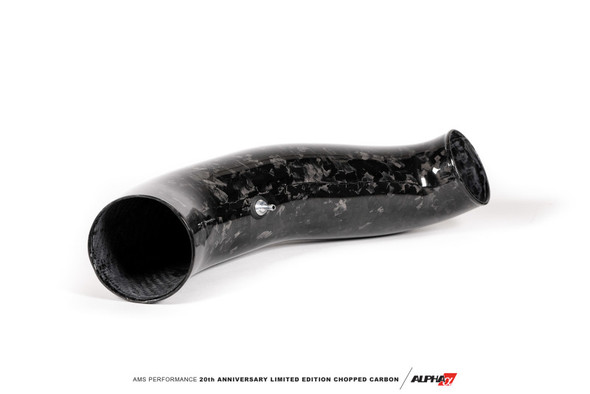
AMS Performance 2015+ VW Golf R MK7 Chopped Carbon Fiber Intake - AMS.21.08.0001-2
AMS
$874.95What is the difference between AMS Air Intakes and a stock intake system?AMS Air Intakes draw a higher volume of cold air into your stock turbocharger, significantly outperforming the restrictive factory system.How much horsepower can AMS Air Intakes...$874.95 -


AMS Performance 2015+ VW Golf R MK7 Carbon Fiber Intake - AMS.21.08.0001-1
AMS
$699.95Will this short ram air intake fit my 2015-2019 Volkswagen Golf R?This AMS short ram air intake is engineered to precisely fit the 2015-2019 Volkswagen Golf R, ensuring optimal integration.How complex is the installation of this short ram air...$699.95
Short ram air intakes replace the factory airbox and restrictive OEM tubing with a high-flow filter and mandrel-bent pipe positioned close to the throttle body, delivering immediate throttle response and measurable top-end power in a compact, easy-to-install package. Motor Sport Mayhem stocks 72 short ram and performance intake systems from 49 brands, priced from $4.95 to $4,012.37, covering everything from weekend canyon runs to full race competition builds.
Our Top Picks for Short Ram Air Intakes
Each unit below was selected based on engineering quality, documented performance results, and real-world fitment reliability across street and track applications.
AEM IND Cold Air Intakes
AEM Induction | $629.99
AEM's precision-tuned intake geometry optimizes air velocity and volume for measurable mid-range and top-end power gains without sacrificing MAF sensor compatibility.
- Retains factory MAF sensor placement for clean ECU integration and reliable street drivability
AFE Black Series Stage-2 Carbon Fiber Cold Air Intakes
aFe | $1,606.00
Carbon fiber construction cuts intake tract weight while delivering superior heat resistance and an unrestricted air path directly from the Pro Dry S filter to the throttle body.
- Stage-2 designation indicates dyno-validated airflow improvements over Stage-1 designs, specifically targeting high-rpm power delivery
AIR Cold Air Intake Kit
Airaid | $472.99
Airaid's performance intake system uses a large-diameter SynthaMax dry filter and rotomolded housing to maximize airflow volume across the full RPM band on both V6 and V8 applications.
- No-oil SynthaMax filter eliminates MAF contamination risk common to oiled gauze filters in street environments
PA Alta Intake
Alta | $369.75
Alta's intake is engineered specifically for forced-induction small-displacement platforms where compressor inlet efficiency has an outsized impact on boost response and peak power.
- Designed to reduce turbo or supercharger inlet restriction, translating directly to faster spool and stronger midrange torque
AMS Air Intakes
AMS | $999.95
AMS Performance builds their intake systems to handle the extreme airflow demands of high-displacement inline-six platforms, using an open airbox design that feeds unrestricted ambient air directly to the filter elements.
- Open airbox configuration maximizes volumetric efficiency at high RPM where factory airbox lid restrictions become a measurable bottleneck
ARB Safari V-Spec Snorkels
ARB | $699.95
ARB's Safari V-Spec snorkel relocates the engine air intake to roofline height, sourcing cooler, cleaner air well above trail dust, water crossings, and engine bay heat soak.
- Ram-effect inlet design converts forward vehicle motion into positive intake pressure, passively increasing air density at speed
AWE S-FLO Intakes
AWE Tuning | $1,895.00
AWE Tuning's S-FLO carbon intake is engineered with computational fluid dynamics-validated airbox geometry and a full carbon fiber construction that resists heat soak under sustained track conditions.
- Targets high-output turbocharged platforms where inlet air temperature management under sustained load is as critical as raw flow volume
BAJ Powersports Hood Scoop Kits
Baja Designs | $432.95
Designed for high-output powersports applications, this hood scoop kit forces ambient air into the intake tract using vehicle forward motion, reducing inlet air temperature and increasing density on turbocharged UTVs.
- Addresses the specific heat soak and dust ingestion challenges of mid-engine powersports platforms where standard intake placement is compromised
GBE Monster-Ram Intake
Banks Power | $898.00
Banks Power's Monster-Ram uses a large-bore intake elbow and high-flow filter system to eliminate the factory diesel intake restriction, delivering more air mass per cycle for improved combustion efficiency and torque output.
- Engineered for heavy-duty diesel applications where sustained towing and hauling demand consistent high-volume airflow under thermal stress
BBK Cold Air Intake Kit
BBK | $449.99
BBK's intake kit combines a mandrel-bent aluminum tube with a high-flow conical filter to remove factory airbox restriction while maintaining street-legal compliance with a CARB EO certification for applicable model years.
- Titanium silver powder coat finish provides long-term corrosion resistance and an under-hood appearance upgrade beyond what bare aluminum offers
How to Choose the Right Short Ram Air Intake
The defining characteristic of a short ram intake is its filter position — it stays inside the engine bay, close to the throttle body, rather than routing down into a fender or bumper like a true cold air intake. That compact layout is both its advantage and its limitation: shorter tract length reduces bends and restrictions for stronger top-end throttle response, but proximity to engine heat can raise inlet air temperature compared to a cold air setup, especially on hot days or during sustained track sessions. The quality separator in this category is thermal management — how well the system shields the filter from radiated engine heat — along with intake pipe internal diameter, wall smoothness, and filter flow rating relative to your engine's displacement and RPM range.
Key Specifications
Pipe diameter is the single most consequential spec on a short ram intake. For street-driven naturally aspirated engines up to roughly 300 horsepower, a 3-inch internal diameter pipe is sufficient. Push past 400 horsepower, especially on boosted applications, and a 3.5- to 4-inch pipe becomes necessary to avoid creating a new restriction at the inlet. Every reduction in pipe diameter at the filter connection point costs airflow, and that loss compounds as RPM rises. Verify the manufacturer's stated pipe ID, not just the nominal sizing, before purchasing.
Filter media and surface area matter as much as pipe sizing. Oiled cotton gauze filters from premium brands flow more air per square inch than dry paper media but require periodic re-oiling and can deposit oil residue on MAF sensors — a real-world issue on street-driven vehicles with hot wire MAF systems. Dry synthetic media eliminates that risk entirely with only a marginal flow penalty. Filter face diameter and cone depth determine total surface area; a short, narrow cone filter will choke a high-displacement engine at peak demand even if the pipe is correctly sized.
Material quality in the intake tube separates budget kits from professional-grade systems. Mandrel-bent aluminum maintains a consistent internal diameter through every bend, while cheaper crush-bent tubes create turbulence-inducing flat spots inside the pipe. Rotomolded plastic housings are acceptable for street use when wall thickness is consistent, but thin-wall plastic near exhaust manifolds can distort over time, creating air leaks at clamp points. On boosted applications, check that all couplers are silicone — not rubber — rated for the inlet temperatures produced upstream of a turbocharger or supercharger.
Heat shielding is the factor most buyers overlook on short ram systems. A bare filter sitting 8 inches from a hot exhaust manifold in summer traffic will see inlet air temperatures 30–60°F above ambient — directly costing power and potentially causing detonation on tuned engines running aggressive ignition timing. Heat shields constructed from plastic or thin aluminum reflect radiated heat effectively; wrapping couplers in heat-reflective sleeving and positioning the filter toward the front of the engine bay rather than the firewall side makes a measurable difference. If your application sees consistent heat soak, a cold air intake with a sealed airbox may ultimately deliver better all-day results despite the longer plumbing.
Short Ram Intake Pipe Diameter Selection by Engine Output
| Engine Output (HP) | Recommended Pipe ID | Filter Face Diameter (Min) | Application Notes |
|---|---|---|---|
| Up to 200 HP | 2.75 in (70mm) | 4.0 in | 4-cylinder NA street; stock MAF compatible |
| 200–300 HP | 3.0 in (76mm) | 5.0 in | V6 NA or lightly boosted 4-cylinder; verify MAF bore match |
| 300–400 HP | 3.0–3.5 in (76–89mm) | 5.5 in | V8 NA or moderately boosted applications; heat shielding critical |
| 400–550 HP | 3.5–4.0 in (89–102mm) | 6.0 in | High-output V8 or turbo; silicone couplers required; consider closed airbox |
| 550–750 HP | 4.0 in (102mm) | 7.0 in | Forced induction performance; dual filters or open airbox often preferred |
| 750+ HP | 4.0+ in or dual inlet | 8.0 in+ | Race/competition; custom fabricated or validated carbon fiber systems; forced induction integration essential |
Price Guide
Entry ($4.95–$175): This range covers replacement filter elements, basic drop-in upgrades, and universal short ram kits without vehicle-specific fitment. You get improved flow over a clogged OEM filter but minimal engineering refinement — pipe bends are often crush-formed, clamps are basic hose clamps, and heat shielding is absent. Appropriate for older vehicles where precise fitment isn't critical or as a filter upgrade only.
Mid-range ($175–$650): The majority of serious street enthusiasts land here, and for good reason. This tier delivers vehicle-specific fitment, mandrel-bent aluminum or quality rotomolded tubing, heat shields, and properly sized high-flow filters with serviceable media. Brands like Injen, Airaid, K&N Engineering, and Volant occupy this space with dyno-tested, CARB-certified options that work reliably day to day.
Premium ($650–$4,012.37): Carbon fiber intake tracts, CNC-machined airbox components, CFD-validated flow geometry, and purpose-built designs for high-output forced induction platforms. This tier is justified on built engines making 500+ horsepower, on track-only vehicles where every degree of inlet temperature reduction counts, or on high-value platforms where precision fitment and long-term durability under sustained thermal stress matter more than acquisition cost. Brands like aFe, AWE Tuning, AMS Performance, and COBB serve this segment with engineering data to back the price.
Who Is This For?
Short ram air intakes serve a wide range of users — from daily drivers chasing throttle feel to dedicated track and drag competitors targeting measurable power gains — and the usage data reflects that breadth clearly.
Engine Performance — 8.6/10
This is the highest-rated application in the category, and it reflects why most enthusiasts install a short ram intake in the first place. Removing the factory airbox restriction increases air mass flow to the engine, improving volumetric efficiency and enabling the ECU to add fuel and advance timing. On naturally aspirated engines the gains are most pronounced at high RPM where the OEM airbox becomes the primary restriction; on forced induction platforms, reducing inlet restriction improves turbo or supercharger efficiency across the entire operating range, with measurable benefits starting at low boost.
Street Performance — 8.1/10
Short ram intakes score equally high for street performance as for raw engine output, which reflects the category's real strength: immediate, accessible throttle response improvement. The shorter intake tract compared to a cold air setup means air column inertia changes faster with throttle input, giving a more direct, responsive feel during everyday driving. For commuters who also enjoy spirited weekend driving, this combination of daily usability and performance gains makes the short ram format the practical default choice over more complex cold air routing.
Easy DIY Install — 8.1/10
Short ram intakes are among the easiest bolt-on modifications available, consistently scoring above 8 for DIY accessibility across nearly 150 products in this category. Most installations involve removing three to five bolts, disconnecting one or two sensors, swapping tubes and filter, and reinstalling in under an hour with basic hand tools. No cutting, no custom brackets, no lifting the vehicle — vehicle-specific kits from reputable brands include everything needed and typically ship with illustrated instructions. If you're new to performance modifications, this is an ideal first install to build confidence before tackling more involved engine work.
Track / Autocross — 7.2/10
At 7.2 out of 10, short ram intakes deliver solid but conditional value at the track. On courses where sustained full-throttle running is limited — autocross, technical road courses with frequent braking zones — heat soak between corners rarely accumulates enough to dent performance, and the short ram's throttle response advantage is fully realized. On high-speed tracks with extended full-throttle sections, inlet air temperature rise in the engine bay becomes a real concern, and this is where a sealed cold air box or a proper cold air intake with heat shielding may serve better. Pair your intake upgrade with a cooling system refresh to keep underhood temperatures in check during track days.
Drag Racing — 7.2/10
Drag racing scores match autocross at 7.2, but for slightly different reasons. In bracket and street class drag racing, a short ram intake on a cool morning produces consistent, repeatable results with minimal complexity. The single-pass nature of drag racing means heat soak between runs — not sustained heat — is the primary concern, and a well-shielded short ram handles that acceptably. At the elite bracket level or in classes where every horsepower is contested, the temperature sensitivity of an unshielded short ram in a hot staging lane becomes a factor, and competitors often graduate to sealed airbox designs or purpose-built intake systems backed by dyno data at those specific RPM ranges.
Trusted Short Ram Air Intake Brands We Carry
The brands leading this category have earned their positions through engineering investment, not marketing spend. aFe brings aerospace-derived carbon fiber construction and proprietary Pro Dry S and Pro 5R filter media validated on their in-house flow bench. K&N Engineering holds the longest track record in high-flow air filtration, with decades of motorsport use supporting their cotton gauze media claims and a million-mile warranty reflecting genuine confidence in filter longevity. Injen developed MR Technology — a resonator-based system that cancels intake noise harmonics while maintaining airflow — making their kits a go-to for enthusiasts who want performance without an intrusive induction roar. Airaid pioneered the no-oil SynthaMax dry filter for street applications, directly addressing MAF contamination failures that plagued oiled filter users, and their rotomolded housings are built to survive engine bay heat cycles for years. AEM Induction brings aerospace-grade engineering with brute-force dyno validation, and their broad fitment catalog combined with CARB certification on most applications makes them a default recommendation for emissions-compliant street builds. Volant rounds out the premium tier with their closed-box PowerCore filter systems, using a dry synthetic media that flows comparably to oiled gauze while being cleanable with compressed air — a meaningful maintenance advantage for high-mileage street vehicles.
Frequently Asked Questions
Are AEM and K&N the same company?
AEM Induction and K&N Engineering are separate, independent companies with distinct engineering approaches. K&N built their reputation on oiled cotton gauze filter media and has been a motorsport filtration supplier since the late 1960s. AEM was founded by racing engineers focused on complete intake systems with precision-tuned tube geometry and broad MAF sensor compatibility. Both brands produce high-quality, CARB-certified intake systems, but their filter media, housing designs, and performance tuning philosophies differ enough that the choice between them often comes down to specific application requirements rather than one being universally superior.
Are cold air intake kits actually worth the money?
On a properly engineered kit matched to your specific engine, yes — intake upgrades consistently produce measurable power and throttle response improvements on dynos. Dyno testing across multiple platforms regularly shows 8–18 horsepower gains on naturally aspirated engines, with larger returns on forced induction applications where inlet restriction directly impacts compressor efficiency. The key qualifier is "properly engineered" — cheap universal kits with crush-bent tubing and undersized filters often show minimal or no gain because they trade one restriction for another. Investing in a vehicle-specific system from a brand that publishes dyno data is the way to ensure the claimed gains are real rather than theoretical.
Are Airaid cold air intakes good?
Airaid intakes are well-regarded across both the street performance and light-duty truck communities for a specific reason: their SynthaMax dry filter media eliminates the MAF sensor oiling contamination problem that affects competing products using oiled gauze filters. Their rotomolded housings are resistant to heat-induced distortion and maintain precise clamp surface geometry over years of thermal cycling. Independent dyno testing on their vehicle-specific kits consistently confirms airflow improvements over stock, and their CARB certification on applicable systems means they're street legal in all 50 states — a non-trivial advantage for daily-driven vehicles subject to emissions inspection.
Are carbon fiber intakes worth it?
Carbon fiber intake systems justify their premium price on two specific grounds: weight reduction and thermal performance. Carbon fiber has a thermal conductivity roughly 10–15 times lower than aluminum, meaning a carbon fiber intake tract absorbs significantly less radiated engine bay heat than an equivalent aluminum tube — directly lowering inlet air temperature and preserving air density. The weight savings are real but modest in absolute terms; a carbon fiber intake tube weighs 60–70% less than aluminum, but the total mass difference on a complete intake system is measured in pounds, not tens of pounds. The performance case is strongest on high-output forced induction platforms where inlet temperature management has a compound effect on boost pressure, charge density, and ignition timing — for a naturally aspirated street car, the thermal and weight benefits rarely justify the cost delta over a quality aluminum system.
Are closed box intakes better than open filter designs?
For most street-driven applications, a closed airbox is better than an exposed open-element filter because it isolates the filter from underhood heat and pulls air from a dedicated cool-air source. An open filter sitting unshielded in the engine bay can see inlet air temperatures 30–60°F above ambient under heavy traffic conditions, and since air density drops as temperature rises, that translates directly to a loss of potential power. On the track, sealed box designs maintain more consistent performance across a session because they resist heat soak during sustained full-throttle running. The exception is purpose-built high-RPM competition applications where maximum instantaneous flow volume matters more than temperature consistency — in those cases, an unrestricted open filter fed by a ram air scoop can outperform a flow-limited closed box at peak demand.
Building something specific? Our performance specialists can help you select the right Short Ram Air Intakes for your application — street, track, or full race build.