
Cold Air Intakes
- Product
- Qty in Cart
- Quantity
- Price
- Subtotal
-

Injen 11 Toyota Camry 3.5L V6 Black Tuned Air Intake w/ Air Fusion/MR Tech/Web Nano Filter - MSM-T-271719
Injen
$407.87Will this cold air intake fit my car?Injen SP Cold Air Intakes are engineered for specific vehicle applications; confirm precise fitment for your make and model using our online tool.How difficult is...$407.87 -
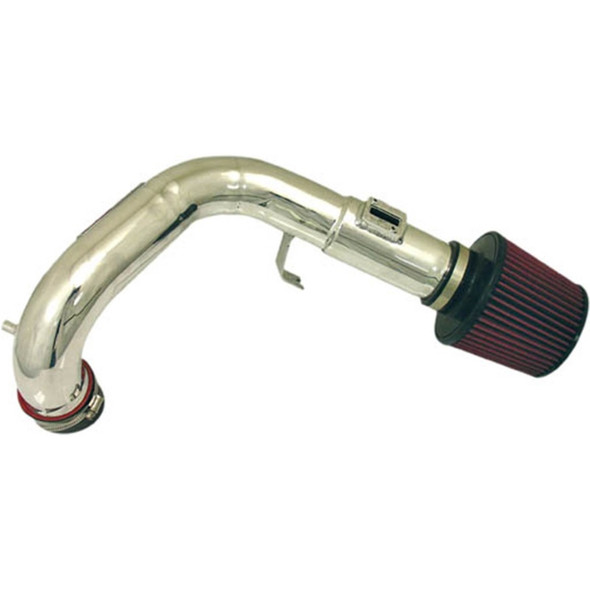
Injen 03-06 Element Polished Cold Air Intake - MSM-T-14982
Injen
$446.00Is this Injen SP Cold Air Intake a direct bolt-on replacement?Confirm fitment with your specific vehicle; professional installation is recommended for optimal integration and performance with this...$446.00 -
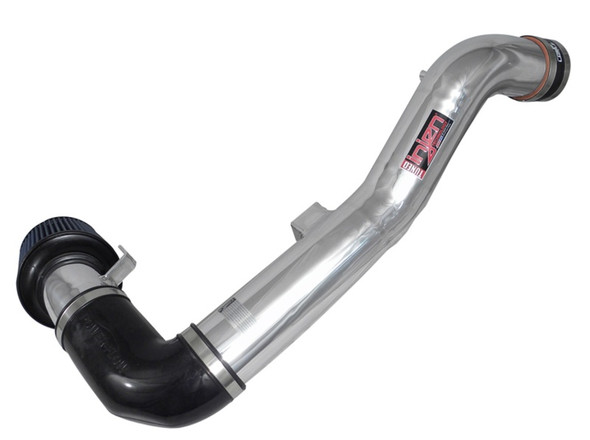
Injen 07-20 Toyota Tundra 5.7L V8 Polished Cold Air Intake - MSM-T-19121
Injen
$472.58Will this intake fit my specific vehicle?Confirm your vehicle's year, make, and model using our compatibility checker for a guaranteed fit with this Injen Power-Flow Intake.Is professional...$472.58 -
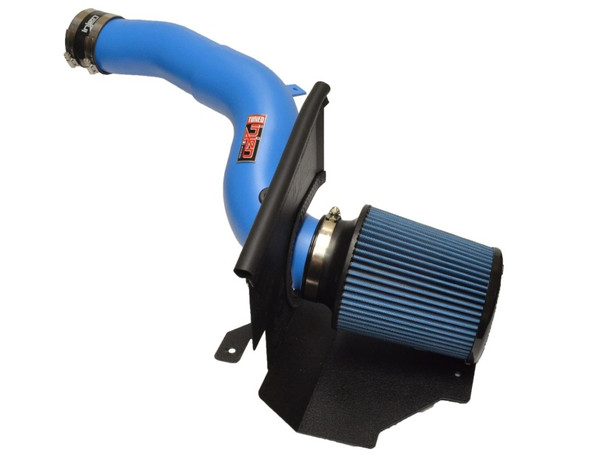
Injen 16-18 Ford Focus RS Special Edition Blue Cold Air Intake - MSM-T-119497
Injen
$504.94Does this intake fit my specific vehicle model and year?Confirm vehicle fitment using our online tool; professional installation ensures optimal integration for your specific vehicle application.How...$504.94 -
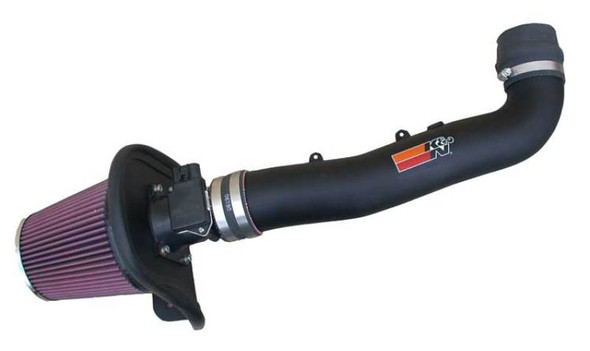
K&N 01-03 Ford Ranger / Mazda B2300 L4-2.3L DOHC Performance Intake Kit - K&NENGINEERING57-2552
K&N Engineering
$367.99What is the primary benefit of installing a K&N 57 FIPK Air Intake System?The K&N 57 FIPK Air Intake System delivers a noticeable surge in horsepower and torque, enhancing your vehicle's acceleration...$367.99 -

Weapon R 4 inch Dragon Air Filter Polished - WEAPONR843-111-101
Weapon R
MSRP: $154.00$121.19How do I know if the WR Dragon Intake will fit my vehicle?Confirm your specific vehicle's fitment details before purchase to ensure optimal installation and performance for your WR Dragon Intake.Is...MSRP: $154.00$121.19 -

Injen 91-98 240SX 16 Valve Requires IS1900 IS1905 or IS1920 Polished Short Ram Intake Air Extens - INJENEIS1920P
Injen
$225.28What is the primary function of a cold air intake system?A cold air intake system directs cooler, denser air into your engine, optimizing combustion for a significant performance increase.Is this a...$225.28 -
 $199.99
 -

Injen 97-99 Camry 4 Cylinder Polished Short Ram Intake - INJENIS2020P
Injen
$290.00Does this intake fit my vehicle?Confirm vehicle fitment using our online tool before proceeding with purchase to ensure perfect compatibility for your specific car model.Is this intake easy to...$290.00 -

Injen 91-95 Legend (non-TCS equipped vehicles) Polished Short Ram Intake - INJENIS1401P
Injen
$305.02Will this cold air intake fit my car?Injen IS Intakes require confirming vehicle fitment using our detailed compatibility tool before purchase and installation.How difficult is it to install this...$305.02 -

Injen 16-19 Ford Fiesta ST 1.6L Turbo 4Cyl Polished Short Ram Intake w/MR Tech - INJENSP9018P
Injen
$313.11How do I determine if the Injen SP Intake will fit my vehicle?Confirm your vehicle's specific make, model, and year on our fitment checker to ensure proper installation of this cold air intake system...$313.11 -

Airaid 13-15 Ford Escape 1.6L/2.0L EcoBoost Intake System (Oiled / Red Media) - AIRAID450-300
Airaid
$249.99$249.99
A cold air intake relocates the filter away from engine heat to draw in denser, oxygen-rich air — directly increasing combustion efficiency, throttle response, and peak power output across naturally aspirated and forced induction platforms. Motor Sport Mayhem stocks 2,456 cold air intakes from 49 brands ranging from $4.95 to $4,012.37, covering everything from budget entry-level upgrades to full carbon fiber competition systems.
Our Top Picks for Cold Air Intakes
Each of these intakes was selected based on demonstrated performance gains, material quality, fitment precision, and real-world results across street and track applications.
AEM IND Cold Air Intakes
AEM Induction | $629.99
AEM's aerospace-grade aluminum tubing and Dryflow filter technology deliver repeatable airflow gains with zero oil migration risk to MAF sensors.
- MAF-compatible tuning path with precision-matched tube diameter for accurate sensor readings
AFE Black Series Stage-2 Carbon Fiber Cold Air Intakes
aFe | $1,606.00
Full carbon fiber construction reduces intake tube weight while providing superior thermal insulation to keep incoming air charge as dense as possible at the filter face.
- Pro Dry S filter media rated for high-horsepower applications without requiring oil servicing
AIR Cold Air Intake Kit
Airaid | $472.99
Airaid's roto-molded intake tubes eliminate seams and sharp bends that create turbulence, keeping airflow laminar from filter to throttle body.
- SynthaMax dry filter media delivers washable, reusable filtration without oiling intervals
PA Alta Intake
Alta | $369.75
Platform-specific engineering means Alta's intake geometry is developed exclusively for the application it serves, not adapted from a universal design.
- Designed to extract measurable mid-range torque gains on turbocharged small-displacement engines
AMS Air Intakes
AMS | $999.95
AMS develops their intake systems on in-house dynos with supporting ECU calibration, ensuring the open airbox design feeds peak flow without triggering sensor faults.
- Engineered for high-revving inline-six platforms where intake resonance tuning impacts peak power significantly
ARB Safari V-Spec Snorkels
ARB | $699.95
Snorkel intakes raise the air pickup point to roofline height, keeping dust, water, and recirculated exhaust gases entirely out of the intake stream during off-road operation.
- High-density polyethylene construction resists UV degradation, impact, and fuel splash without cracking
AWE S-FLO Intakes
AWE Tuning | $1,895.00
AWE's S-FLO carbon intake uses computational fluid dynamics modeling to eliminate turbulent flow zones that rob power in stock intake routing.
- Carbon fiber airbox seals the filter from underhood heat while the carbon tube minimizes thermal soak between pulls
BAJ Powersports Hood Scoop Kits
Baja Designs | $432.95
Ram-air hood scoop designs feed forced, forward-facing airflow directly into the intake path, generating positive pressure at speed that amplifies turbocharger inlet volume.
- Purpose-built for powersports turbocharged platforms where underhood heat and dust ingestion are primary concerns
GBE Monster-Ram Intake
Banks Power | $898.00
Banks Power's Monster-Ram design replaces the factory elbow and intake horn with a large-bore, straight-shot plenum that dramatically reduces restriction at the turbocharger inlet on diesel applications.
- Integrated fuel line routing eliminates fitment conflicts on chassis cab configurations for clean, professional installation
BBK Cold Air Intake Kit
BBK | $449.99
BBK's mandrel-bent aluminum intake tube maintains a consistent inner diameter through every curve, eliminating the flow dead zones that crush-bent tubing creates at throttle body entry.
- CARB Executive Order compliance makes this a legal street upgrade in emissions-tested states for covered model years
How to Choose the Right Cold Air Intakes
The difference between a cold air intake that makes real power and one that just looks good under the hood comes down to four engineering fundamentals: filter placement relative to heat sources, intake tube diameter matched to engine displacement and target RPM range, housing seal integrity to prevent hot air recirculation, and filter media that flows adequately without sacrificing filtration efficiency. Poor-quality units use crush-bent tubing that constricts airflow at every bend, undersized filter elements that choke the engine at high RPM, and unsealed housings that pull hot air straight off the exhaust manifold — negating every gain the cold air location should deliver.
Key Specifications
Intake tube diameter is the most misunderstood spec in this category. For naturally aspirated engines, tube ID should be sized to match or slightly exceed the throttle body bore — going too large too early creates velocity drop that hurts low-end torque. For forced induction applications, the priority shifts to minimizing restriction at the turbocharger or supercharger inlet, where pressure drop directly translates to boost lag and reduced compressor efficiency. Always cross-reference tube diameter against your throttle body ID before purchasing.
Filter media choice between oiled cotton gauze and dry synthetic has practical consequences beyond preference. Oiled filters flow exceptionally well and have proven longevity, but excess oil migrates onto MAF sensor wires and causes false lean readings that require cleaning and sometimes recalibration. Dry filter technology has improved dramatically — modern dry synthetic media from brands like AEM and Airaid approaches oiled-filter flow numbers without the sensor contamination risk, making them the safer choice on MAF-based systems. For speed density or MAP-only platforms, either filter type is appropriate.
Housing design separates a true cold air intake from a short ram with relocated filter. A sealed airbox or heat shield that completely isolates the filter from underhood air is essential — without it, the air entering the engine is ambient engine bay temperature, typically 30–50°F hotter than outside air, which directly costs power. Closed-box designs consistently outperform open-element setups on street cars where underhood temperatures climb during low-speed driving and traffic. On the track or in drag racing applications where there's constant ram airflow through the grille, open elements in front-mounted positions can be competitive. For a broader look at air intake systems including short rams and throttle body spacers, see the full category.
CARB Executive Order (EO) numbers matter if you're in California or any of the 14 states that follow California emissions standards. An intake without a CARB EO number is technically illegal for street use in those states and can result in a failed smog inspection. Most reputable brands publish their EO numbers on the product listing — if it's not listed, assume it's off-road or race use only. For track-only or competition builds, emissions compliance is irrelevant, and race-spec systems prioritize flow over legality.
Cold Air Intake Tube Diameter vs. Engine Application Guide
| Engine Displacement | Recommended Intake Tube ID | Throttle Body Range | Typical Application |
|---|---|---|---|
| 1.0L – 1.6L (NA) | 2.5" – 2.75" | 55mm – 65mm | Compact/subcompact street cars |
| 1.6L – 2.5L (Turbocharged) | 2.75" – 3.0" | 60mm – 70mm | Performance hatchbacks, sport compacts |
| 2.5L – 4.0L (NA) | 3.0" – 3.5" | 70mm – 80mm | Mid-size performance sedans, sports cars |
| 4.0L – 6.0L (NA/Mild Forced) | 3.5" – 4.0" | 80mm – 90mm | V8 muscle cars, sport trucks |
| 6.0L+ (High-Boost Forced Induction) | 4.0" – 5.0" | 90mm – 105mm+ | High-output V8/diesel, competition builds |
| Diesel Turbocharged (any displacement) | 4.0" – 5.0" (pre-turbo) | Turbo inlet flange matched | Towing, diesel performance, sled pull |
Price Guide
Entry ($4.95–$150): This range covers drop-in filter replacements, universal cone filters, and basic heat shields — useful for filter upgrades and minor airflow improvements but not true cold air intake systems. Expect minimal horsepower gains and limited fitment engineering at this price point. Best suited for high-mileage vehicles where filter replacement is the primary goal.
Mid-range ($150–$600): The majority of vehicle-specific cold air intake kits land here, and this is where most enthusiasts get the best return on investment. You get mandrel-bent aluminum or roto-molded plastic tubing, a quality filter element, and proper heat shielding — all engineered for your specific platform. Brands like Injen, Airaid, K&N, and Volant deliver proven, tested systems at this tier with documented dyno results and CARB compliance on most applications.
Premium ($600–$4,012.37): Carbon fiber intake systems, competition-spec open airboxes, and platform-specific high-performance configurations occupy this space. The cost is justified on high-horsepower builds where every thermal and flow advantage compounds — particularly on forced induction engines where intake air temperature directly affects boost response and knock threshold. COBB, AWE Tuning, AMS, and aFe's top-tier lines target this market with systems that require supporting ECU calibration to extract full benefit.
Who Is This For?
Cold air intakes serve a genuinely wide range of builders — from daily drivers looking for better throttle response to full competition builds where intake efficiency is tuned with supporting fuel and ignition calibration.
Engine Performance — 8.6/10
Cold air intakes score at the top of the usage matrix for raw engine performance, and for good reason — reducing intake air temperature and restriction is one of the most direct mechanical paths to increased volumetric efficiency. Denser air means more oxygen per combustion cycle, which supports more fuel and produces more power. On forced induction engines specifically, a lower-restriction intake path reduces turbo inlet depression, which lowers compressor work and keeps intake air temperatures down through the entire charge path — an effect that compounds with an upgraded intercooler on high-boost setups.
Street Performance — 8.1/10
Street performance scores 8.1/10 because the gains a cold air intake delivers — sharper throttle response, improved mid-range pull, and a more linear power curve — are immediately noticeable in real driving conditions without requiring dyno tuning to experience. The induction sound improvement alone changes the character of daily driving for enthusiasts. Most street-focused systems are also designed for bolt-on installation without ECU recalibration, making this one of the highest-impact, lowest-complication modifications available.
Easy DIY Install — 8.1/10
At 8.1/10, DIY install scores reflect that vehicle-specific cold air intake kits are engineered to use existing mounting points and sensor ports with no cutting, welding, or custom fabrication. Most installations require only basic hand tools and take 30–90 minutes. The critical steps are ensuring all couplers are fully seated and clamped to prevent air leaks, and confirming MAF sensor orientation matches the original — improper MAF positioning causes erratic fueling that's often misdiagnosed as a tune issue.
Track / Autocross — 7.2/10
Track and autocross applications score 7.2/10 because the benefit of cold air placement is partially offset by sustained high-RPM operation where filter restriction becomes the dominant variable — at that point, filter face area and media flow rating matter more than intake tube location. Sealed airbox designs with high-flow filters outperform open-element systems at the track where underhood temperatures stay elevated for extended periods. For serious track builds, pairing the intake upgrade with supporting exhaust work and an ECU tune extracts the full potential from the intake flow improvement.
Drag Racing — 7.2/10
Drag racing also scores 7.2/10 — the short duration of a drag pass means underhood heat soak is less of a factor than in road racing, but intake restriction and air charge density remain critical at peak RPM where maximum power is produced. Ram-air and hood scoop configurations earn their place here by feeding positive-pressure, forward-ram airflow at speed that functions similarly to a mild supercharger effect. For drag-specific builds, the intake is typically one component of a coordinated engine package rather than a standalone modification.
Trusted Cold Air Intakes Brands We Carry
The brands dominating this category earned their positions through documented performance testing, manufacturing precision, and years of platform-specific fitment development. aFe Power leads our catalog with 895 products averaging nearly $387 — their stage-based system of intake development from street to full race uses consistently high-grade materials and extensive dyno validation. K&N Engineering holds 645 products and owns the most recognizable name in filtration, backed by decades of OEM supplier contracts and CARB certifications across virtually every platform. Injen Technology contributes 554 products with a focus on mandrel-bent polished aluminum and heat-insulated tubing, making them a consistent choice for enthusiasts who want both performance and underhood aesthetics. Airaid and Volant specialize in sealed MXP and closed-box intake systems that excel on street builds where heat isolation is the priority, while COBB Tuning — the highest average price in our lineup at $505 — develops intakes as part of calibrated, tune-supported performance packages where intake and ECU work together as a system.
Frequently Asked Questions
Are cold air intakes actually worth it?
Yes — when properly selected and installed, a cold air intake delivers measurable gains in throttle response, mid-range torque, and peak horsepower by reducing intake restriction and lowering intake air temperature. Dyno-verified gains on naturally aspirated engines typically range from 5–15 hp depending on how restrictive the factory intake was, with turbocharged engines often showing larger gains because the intake feeds directly into the compressor where air density has a compounding effect on boost pressure. The modification also improves induction sound and, on properly maintained filter systems, extends air filter service intervals compared to paper OEM elements. The key is choosing a vehicle-specific system with a sealed heat shield rather than a generic short ram that draws hot underhood air.
Are closed box intakes better than open-element setups?
For most street and daily-driven vehicles, yes — a closed or sealed airbox design consistently outperforms an open-element cone filter in real-world conditions because it physically blocks underhood heat from reaching the filter face. Engine bay temperatures at idle and in traffic can run 150–200°F, and every 10°F increase in intake air temperature costs roughly 1% in power output. Open-element filters exposed to underhood air can negate the entire benefit of relocating the filter in the first place. The exception is on vehicles with dedicated cold air ducting that feeds the cone directly from a cold air source — in that configuration, an open high-flow filter in a properly ducted location can match or exceed a sealed box in both flow and temperature control.
Are carbon fiber intakes worth the premium cost?
Carbon fiber intakes are worth the premium in specific high-performance applications where weight reduction, thermal insulation, and prestige all matter simultaneously. Carbon fiber has roughly one-third the thermal conductivity of aluminum, which means the intake tube itself absorbs and transfers significantly less heat to the air charge during extended high-load operation — a meaningful advantage on track and in competition. The weight savings over equivalent aluminum tubing are real but rarely performance-critical on street cars. Where carbon genuinely earns its cost is on dedicated performance platforms where intake air temperature management is part of a broader calibration strategy, and where the builder is already extracting enough power that marginal heat soak reductions translate to consistent performance differences.
Are Airaid cold air intakes good?
Airaid produces consistently well-engineered intake systems with a focus on sealed MXP intake designs and proprietary SynthaMax dry filter media — both strong choices for street-driven vehicles. Their roto-molded intake tubes eliminate the seam lines and wall-thickness variations that plague cheaper alternatives, maintaining consistent airflow geometry from filter to throttle body. Airaid systems are well-documented with dyno testing, offer CARB certification on a wide range of applications, and their dry filter design eliminates the oil migration issue that plagues some competitor systems on MAF-equipped engines. At an average price around $248, they sit in the mid-range tier where the engineering-to-cost ratio is genuinely strong.
Are AEM and K&N the same company?
No — AEM Induction and K&N Engineering are separate, independent companies with different ownership, manufacturing facilities, and engineering approaches. K&N is the older brand, founded in 1969, and is best known for oiled cotton gauze filter media that the company essentially pioneered for the aftermarket. AEM was founded in 1987 with a focus on motorsport electronics and later expanded into intake systems using their proprietary Dryflow filter technology as a direct counter to oil-based filter systems. Both brands carry CARB certification on a wide range of applications and have OEM supply relationships, but their filter media philosophy, intake tube materials, and system designs are distinct — the choice between them often comes down to preference for oiled versus dry filter media and specific fitment availability for your platform.
Building something specific? Our performance specialists can help you select the right Cold Air Intakes for your application — street, track, or full race build.