
Cabin Air Filters
- Product
- Qty in Cart
- Quantity
- Price
- Subtotal
-


K&N 2023 Hyundai Santa Fe 1.6L / 2.5L L4 Cabin Air Filter - VF2085
K&N Engineering
$54.99How often should I replace my K&N Cabin Air Filter?Replace your washable K&N Cabin Air Filter annually or when airflow is noticeably reduced for optimal performance.What is the main benefit of using a K&N Cabin Air Filter?K&N Cabin Air Filters deliver...$54.99 -
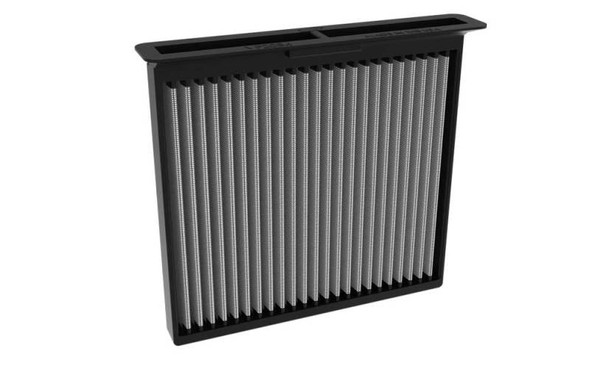

K&N 19-23 Subaru Forester Cabin Air Filter - VF2084
K&N Engineering
MSRP: $52.99$47.98How often should I replace my K&N cabin air filter?K&N washable cabin air filters are designed for extended service life, offering superior filtration for your 2016-2025 Subaru Forester, Impreza, or WRX.Is this filter easy to install?Installing this...MSRP: $52.99$47.98 -

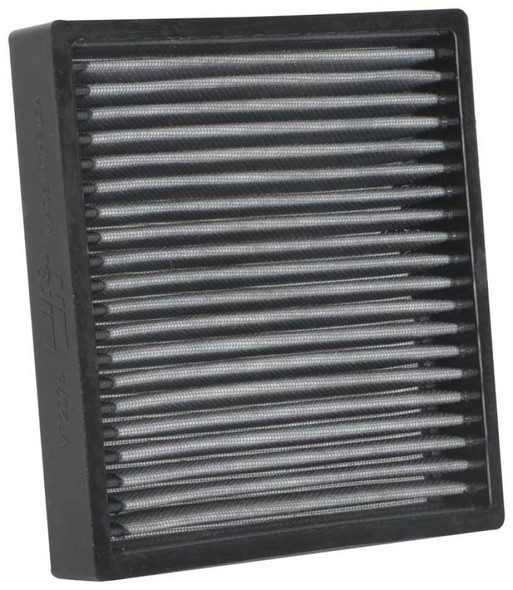
K&N 19-20 Nissan Altima Cabin Air Filter - VF2076
K&N Engineering
$49.99How often should I replace my cabin air filter?K&N recommends replacing this washable cabin air filter every 30000 miles or annually to maintain optimal air quality.Is this cabin air filter easy to install?Install this K&N cabin air filter as a direct...$49.99 -


K&N 19-20 Mazda 3 - 2.5L L4 / 2020 CX-30 2.5L L4 Replacement Cabin Air Filter - VF2074
K&N Engineering
$49.99How often should I replace my cabin air filter?K&N Cabin Air Filters are washable and designed for long-term use; consult your vehicle's manual for specific replacement intervals.How easy is it to install a K&N cabin air filter?Easily upgrade your...$49.99 -
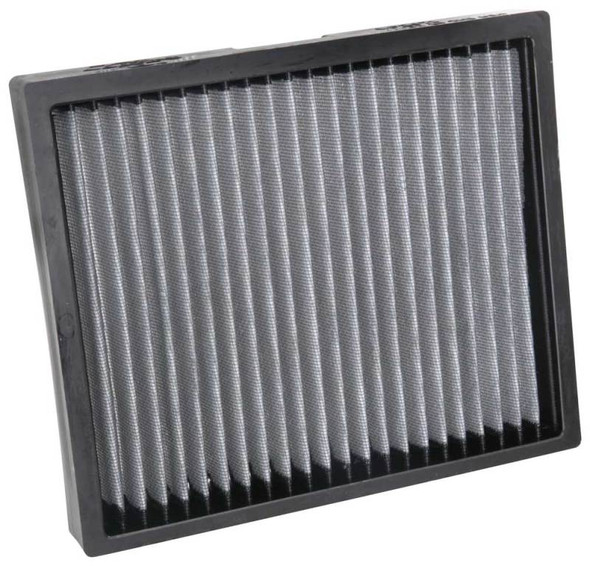
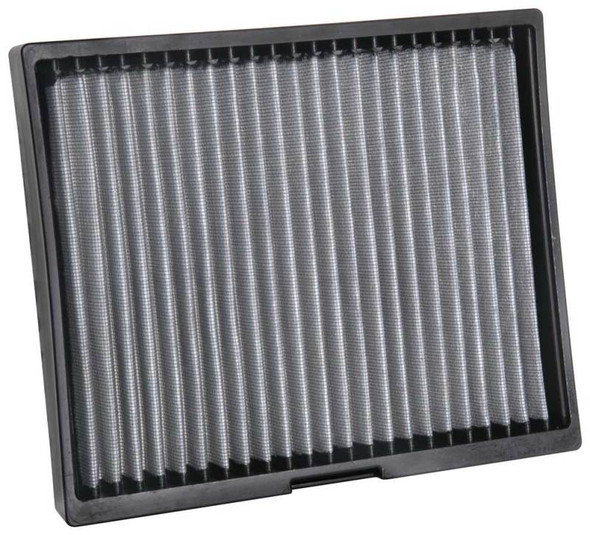
K&N Replacement Cabin Air Filter - VF2071
K&N Engineering
$49.99How often should I replace my K&N Cabin Air Filter?K&N Cabin Air Filters are washable and reusable, designed to last for a decade or one million miles of cleaner cabin air.How do I install a K&N Cabin Air Filter?Installation is simple; K&N Cabin Air...$49.99 -

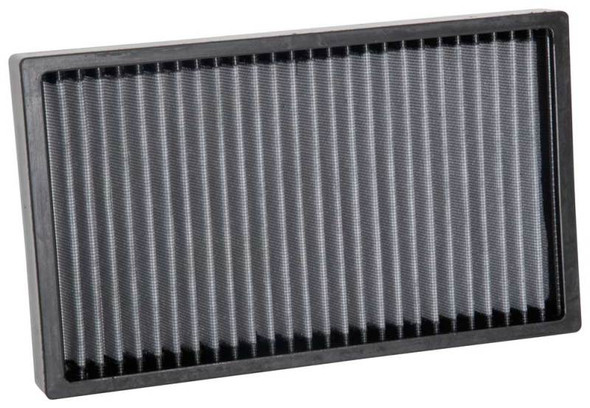
K&N 14-18 Maserati Ghibli 3.0L / 14-18 Maserati Quattroporte 3.0l/3.8L Cabin Air Filter - VF2067
K&N Engineering
$54.99How often should I replace my K&N Cabin Air Filter?Replace your K&N Cabin Air Filter every 15,000 miles for optimal cabin air quality and HVAC protection in your Maserati.Are K&N cabin air filters easy to install?Installing K&N Cabin Air Filters is a...$54.99 -

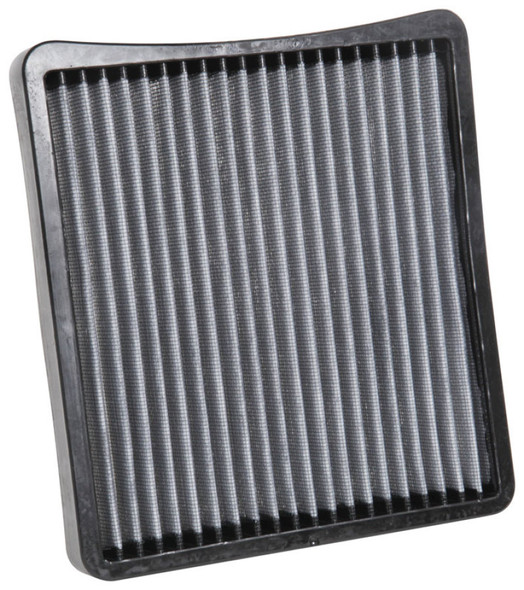
K&N 2019 RAM 1500 3.6L/5.7L Cabin Air Filter - VF2065
K&N Engineering
$49.99Will this cabin air filter fit my vehicle?K&N cabin air filters are designed as direct drop-in replacements, ensuring compatibility when you confirm your specific vehicle's fitment.How often should I replace my cabin air filter?Replace your K&N cabin air...$49.99 -


K&N 12-20 Hyundai/Kia Tucson/Sportage/Kona/Veloster Cabin Air Filter - VF2062
K&N Engineering
$54.99What makes K&N Cabin Air Filters better than stock filters?K&N Cabin Air Filters offer superior contaminant capture with a specially pleated, high-flow synthetic material for a fresher cabin environment.How do I install a K&N Cabin Air Filter?Install a...$54.99 -
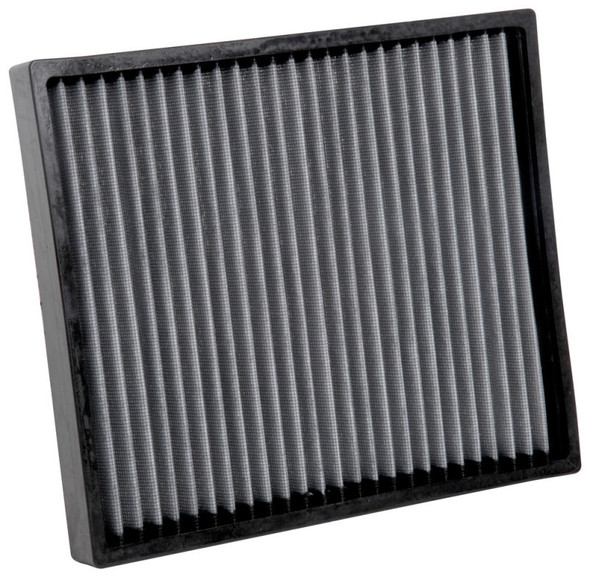
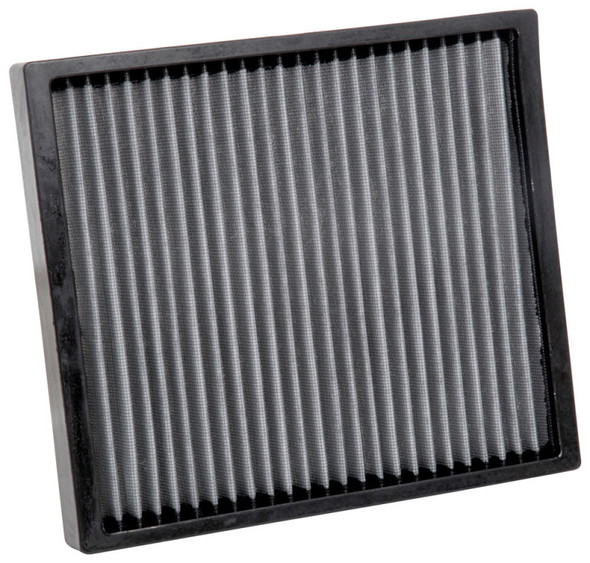
K&N 09-16 Hyundai Genesis Cabin Air Filter - VF2061
K&N Engineering
$49.99How often should I replace my cabin air filter?Confirm your vehicle's specific maintenance schedule; K&N Cabin Air Filters are designed for long-term value and superior cabin air quality.Can I install a K&N cabin air filter myself?Installing a K&N Cabin...$49.99 -


K&N 17-18 Hyundai Elantra Cabin Air Filter - VF2059
K&N Engineering
$49.99How often should I replace my cabin air filter?K&N cabin air filters are washable and reusable, designed to last for a decade of cleaner air and driving enjoyment.Is it difficult to install a K&N cabin air filter?Installing your K&N cabin air filter is...$49.99 -

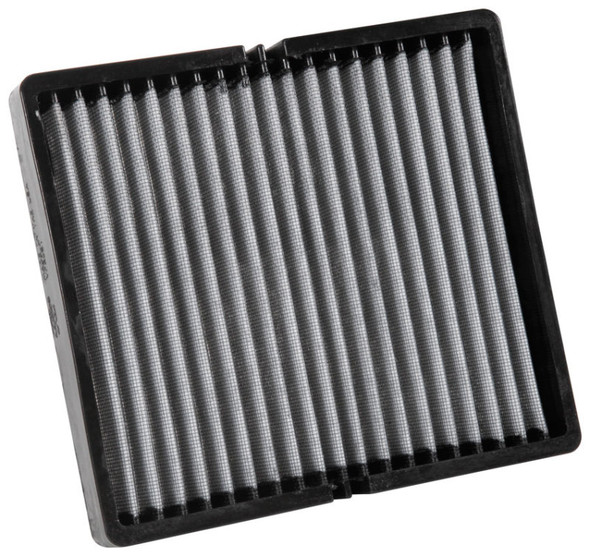
K&N 14-17 Lexus IS350 Cabin Air Filter - VF2057
K&N Engineering
$49.99How often should I replace my cabin air filter?Replace your K&N cabin air filter every 12000 miles or annually for optimal interior air quality and HVAC performance.Can I wash my K&N cabin air filter?Yes, K&N washable cabin air filters are designed for...$49.99 -


K&N 09-18 Subaru Forester 2.5L H4 F/I Cabin Air Filter - VF2055
K&N Engineering
$49.99How often should I replace my K&N cabin air filter?K&N cabin air filters are engineered to last for a decade or one million miles, offering enduring clean air for your vehicle's interior.Can I install this cabin air filter myself?Easily install your K&N...$49.99
Cabin air filters control the quality of air entering your vehicle's HVAC system, and the right aftermarket unit delivers meaningfully better filtration efficiency, longer service intervals, and in high-performance applications, reduced intake restriction compared to OEM paper elements. Motor Sport Mayhem stocks 76 cabin air filters across 40 brands — from budget-friendly daily driver replacements to race-grade multi-layer media units — priced from $8.99 to $944.99.
Our Top Picks for Cabin Air Filters
Every product below was selected based on filtration performance, build quality, and documented real-world results across street, track, and competition applications.
AEM IND Universal Air Filter
AEM Induction | $83.99
Dry-flow synthetic media delivers high filtration efficiency without requiring oil treatment, making it a maintenance-friendly option for performance builds.
- Oil-free dry media eliminates the risk of MAF sensor contamination from over-oiled filters
AFE Universal Pro-G 7 Filter
aFe | $319.00
Seven-layer progressive density cotton gauze media provides exceptional dust-holding capacity alongside low restriction, engineered for high-demand diesel and turbocharged applications.
- Pro Guard 7 multi-layer construction captures contaminants at each media layer before they reach the intake
AIR Direct Fit Dry Air Filter
Airaid | $241.99
Direct-fit dry media construction drops into OEM airbox positions without modification, delivering a noticeable reduction in intake restriction over the factory paper element.
- Precision-molded sealing surface ensures zero bypass air — every cubic foot of intake charge is filtered
ABR Air Filters
All Balls Racing | $34.56
Purpose-built for powersports and off-road platforms where dust ingestion and vibration resistance are primary concerns, not just horsepower gains.
- Engineered for powersports OEM fitment tolerances where standard automotive filters simply won't seal correctly
PA Alta Direct Fit Filter
Alta | $82.45
Matched to specific intake inlet diameters for a zero-leak interface, this replacement filter maintains the full flow benefit of the cold air system it supports.
- Inlet-specific sizing preserves the pressure recovery designed into the original intake system
AMS Air Filters
AMS | $129.95
Developed alongside AMS intake systems, these replacement filter kits maintain the tuned flow characteristics of the complete induction package rather than compromising them with a generic element.
- System-matched filtration ensures intake tune maps remain accurate after filter replacement
AWE S-FLO Filters
AWE Tuning | $125.00
S-FLO technology is engineered to optimize airflow velocity and volume simultaneously, making these filters particularly effective on turbocharged platforms where inlet restriction directly impacts spool response.
- Specifically developed for forced induction applications where pre-turbo restriction affects boost onset and compressor efficiency
GBE Ram Air Filter Elements
Banks Power | $119.00
Designed for diesel tow and work truck applications where sustained high-load operation demands exceptional dust capacity and filtration efficiency over extended service intervals.
- High dust-holding capacity media is critical for diesel platforms that ingest significantly more airflow volume per cycle than equivalent gasoline engines
BBK Air Filter Replacement
BBK | $59.99
A direct replacement engineered to restore the original flow performance of BBK cold air intake systems, maintaining the gains the intake was designed to deliver.
- OEM-to-BBK-kit cross-compatibility means no adapter rings or compromised sealing geometry at the inlet flange
BDD Crank Case Vent Filters
BD Diesel | $524.95
Crankcase ventilation filtration addresses a critical contamination pathway on high-mileage diesel platforms, separating oil aerosols and combustion blow-by from the intake charge before they coat downstream components.
- Dedicated crank case vent filtration prevents MAF sensor fouling and intercooler oil accumulation — both common on aging diesel engines without proper PCV filtration
How to Choose the Right Cabin Air Filters
The defining variables in cabin air filter selection are media type, filtration efficiency rating (typically expressed as a percentage of particles captured at a given micron size), dust-holding capacity, and whether the filter is designed as a direct OEM replacement or a universal fitment for a custom intake configuration. A filter that doesn't seal properly at its mounting surface is worse than useless — bypass air carrying unfiltered particulate reaches the engine while your filter media sits untested. Every specification you evaluate has to account for your specific application: a daily driver needs long service intervals and high efficiency; a competition vehicle needs the lowest possible restriction even if that means more frequent element inspection.
Key Specifications
Media type is the first decision point. Cotton gauze elements — the type popularized by K&N and used by brands like BMC and aFe — offer low restriction and washable/reusable life, but must be correctly oiled on oiled-type variants or MAF contamination risk is real. Dry synthetic media, used by AEM and Airaid among others, eliminates the oiling step entirely and typically offers tighter particle filtration at the cost of slightly higher restriction in some configurations. For high-dust environments including track days, autocross, and off-road, a multi-layer progressive density design captures coarse particles in the outer media layers and fine particles deeper in the element — dramatically extending service intervals without sacrificing protection.
Filtration efficiency ratings matter more than most buyers realize. The ISO 5011 test standard is the benchmark — it measures particle capture efficiency across multiple particle sizes under standardized airflow conditions. A filter rated at 99%+ efficiency at 5–10 microns provides meaningful protection for precision-machined engine components. Budget paper OEM elements typically test between 95–98% efficiency but offer zero service life extension and add restriction as they load with debris. High-performance aftermarket elements maintain lower differential pressure across the media throughout their service life because larger surface area and lower restriction media allows contamination to accumulate without choking flow.
Fitment tolerance is non-negotiable. A direct-fit replacement filter must match the OEM airbox sealing geometry exactly — even a 1–2mm gap in the foam or rubber sealing bead creates a bypass path. Universal cone and cylindrical filters must be matched precisely to the inlet tube diameter of the intake system; a loose clamp fit on a 3-inch inlet tube is not the same as a filter purpose-built for that application. For cold air intake systems, always replace the filter element with one from the same manufacturer where possible — the airflow modeling that produced the intake's power gains assumes a specific filter profile and flow resistance.
Service interval expectations vary significantly by media type and operating environment. A quality cotton gauze element used in normal street conditions can go 50,000 miles between cleaning cycles; the same element used on dusty unpaved roads may need inspection every 5,000–10,000 miles. Multi-layer synthetic media filters for diesel and turbocharged applications often specify replacement rather than cleaning — the progressive density layers cannot be fully restored by washing. Always follow the manufacturer's inspection criteria, not a generic mileage interval, particularly on forced induction engines where a partially loaded filter upstream of the compressor wheel increases inlet restriction and can shift the compressor map toward surge at high boost levels.
Air Filter Media Type vs. Filtration Efficiency and Flow Characteristics
| Media Type | Typical Filtration Efficiency (ISO 5011) | Relative Flow Restriction | Best Application |
|---|---|---|---|
| OEM Paper (single-layer) | 95–98% @ 10 micron | High (increases with loading) | Budget replacement, non-performance use |
| Oiled Cotton Gauze (4–8 layer) | 98–99% @ 10 micron | Low (stable under load) | Street performance, track, road racing |
| Dry Synthetic (non-oiled) | 99–99.5% @ 5–10 micron | Low-medium (no MAF oil risk) | Street performance, MAF-sensitive builds |
| Progressive Density Multi-layer | 99%+ @ 5 micron | Very low (high surface area) | Diesel, turbocharged, high-dust environments |
| Foam (single or dual-density) | 95–98% @ 15–20 micron | Medium (density dependent) | Powersports, off-road, ATV/UTV platforms |
| Nanofiber Composite | 99.5%+ @ 1–3 micron | Low-medium | Competition, extreme dust, diesel longevity builds |
Price Guide
Entry ($8.99–$45.00): Direct-fit OEM-equivalent or single-layer performance replacements suited to daily drivers and powersports platforms where maintenance is frequent and cost per interval matters more than maximum performance delta. Quality varies significantly at this price point — look for filters with defined ISO 5011 test data rather than marketing claims.
Mid-range ($45.00–$200.00): This is where most street performance and track-day builds land. You're getting multi-layer cotton gauze or dry synthetic media with genuine flow and efficiency advantages over OEM, proper sealing geometry, and documented service procedures. Brands like K&N, aFe, AEM, BBK, and Airaid all offer strong options in this band with verifiable test data behind them.
Premium ($200.00–$944.99): Purpose-built race and competition media, multi-element crankcase filtration systems, and system-specific filter kits for high-output forced induction or diesel performance builds. The cost reflects precision engineering for a specific application — if you're running modified forced induction or a diesel pulling truck, the price difference between a premium system-matched filter and a mid-range universal is negligible against the cost of contamination-related engine damage.
Who Is This For?
Cabin air filters serve everyone from daily commuters to full competition builds, but the performance expectations and selection criteria differ substantially across those use cases.
Engine Performance — 8.6/10
This category scores highest in the usage matrix for engine performance, and that's consistent with what the physics actually deliver. Reducing inlet restriction across the filter element lowers the pressure differential the engine must overcome on every intake stroke, and on turbocharged platforms it reduces the work the compressor must do to achieve target boost pressure. The efficiency gains are real but modest on naturally aspirated street engines — typically 2–6 HP depending on the OEM restriction level — and more significant on high-flow forced induction builds where inlet restriction directly affects compressor operating point.
Easy DIY Install — 8.7/10
This is the highest score in the entire usage matrix, and it reflects the reality that direct-fit cabin air filter replacement is one of the most accessible performance modifications available — requiring no tools in many applications and no tuning changes. Direct-fit drop-in replacements install in 5–15 minutes with factory hardware and zero cutting or fabrication. Even universal cone filters for custom intakes require only a clamp and basic hand tools. This accessibility makes cabin air filters a strong first modification for performance builds and an easy maintenance item for experienced builders.
Street Performance — 7.9/10
For street-driven performance vehicles, the combination of real airflow improvement and low restriction media that maintains efficiency across thousands of miles makes aftermarket cabin air filtration a logical first step before more expensive modifications. The street performance score reflects both the measurable gains and the practical benefit of extended service intervals — a quality multi-layer element that doesn't need replacement for 50,000+ miles pays for itself quickly against OEM paper filter replacement costs. Pairing an upgraded filter element with a quality air intake system compounds the benefit significantly.
Racing Competition — 7.4/10
Competition applications demand the lowest possible restriction at any given filtration efficiency — every millibar of pressure drop across the filter is a millibar the engine can't recover. At the same time, competition environments often involve more dust, debris, and thermal cycling than street use, demanding media with high dust-holding capacity and robust sealing under vibration. The 7.4/10 score reflects both the genuine contribution high-performance filter elements make to competition builds and the reality that in pure racing classes, many competitors move to open inlet or purpose-built filter housings that fall outside this category's scope.
Track / Autocross — 7.5/10
Track and autocross use places filters under sustained high-RPM operation where intake airflow volume is at maximum for extended periods — the conditions under which filter restriction and media loading have the greatest effect on power output. A partially loaded element that measures acceptable at idle-to-partial throttle can create measurable power loss at full-throttle sustained operation. Inspection intervals should be shortened for track-use vehicles, particularly those operating on dusty or unprepared surfaces, and filter selection should prioritize low differential pressure at high airflow volume over maximum filtration efficiency at low flow rates.
Trusted Cabin Air Filters Brands We Carry
The brands that consistently lead this category do so because they invest in media engineering and publish verifiable test data rather than relying on marketing claims alone. K&N Engineering has over 50 years of filtration development with ISO 5011-tested media across the widest vehicle application coverage in the industry. aFe developed its Pro Guard 7 multi-layer cotton gauze technology specifically for diesel and high-output applications where both filtration efficiency and extreme dust capacity are required simultaneously. BMC brings Formula 1 and World Rally Championship filtration pedigree to street and competition applications, using a unique cotton gauze specification with notably higher fiber density than many competitors. AEM Induction pioneered Dryflow synthetic media as a legitimate alternative to oiled cotton gauze, eliminating MAF sensor contamination risk without sacrificing flow performance. Airaid focuses on direct-fit media technology with precision-molded sealing geometry developed from OEM tooling data, and Banks Power has built its filtration line around the specific demands of diesel performance where air volume, dust capacity, and long-term filtration integrity are all critical to engine longevity.
Frequently Asked Questions
Are aftermarket cabin air filters as good as OEM?
In most measurable performance categories, quality aftermarket cabin air filters exceed OEM paper elements rather than simply matching them. OEM filters are engineered to a cost target that prioritizes initial filtration efficiency at the expense of service life, flow resistance over time, and media durability. High-performance aftermarket elements using multi-layer cotton gauze or dry synthetic media maintain lower restriction throughout their service life, offer equal or better filtration efficiency at specified particle sizes, and in washable/reusable configurations deliver a lower total cost over the vehicle's life. The one area where OEM filters can outperform cheap aftermarket replacements is sealing geometry — a poorly made aftermarket filter with a compromised foam sealing bead allows bypass air and defeats the purpose entirely, which is why buying from established brands with documented fitment data matters.
Are BMC air filters worth it, and how do they compare to K&N?
BMC filters are worth the premium for applications where maximum filtration efficiency and motorsport-proven media performance are priorities. BMC's cotton gauze specification uses a higher fiber density than the industry standard, which delivers marginally higher filtration efficiency at fine particle sizes while maintaining low restriction — a combination that's genuinely difficult to achieve. K&N offers a broader vehicle application catalog and strong performance across the board, making it the more practical choice for most builds. For pure street performance and track use, both brands deliver real results; BMC's motorsport heritage makes it the choice for competition builds and high-output engines where the premium is justified by the application's demands.
Are cheap cabin air filters any good?
Cheap filters fall into two categories: no-name generic elements with no published test data, and budget-tier offerings from legitimate manufacturers. The former is genuinely risky — inadequate sealing geometry, inconsistent media density, and no quality control over filtration efficiency mean you may be getting OEM-equivalent performance at best and unfiltered bypass air at worst. Budget-tier options from established brands — generally in the $8.99–$30 range — are legitimate products built to lower specifications, typically single-layer media with shorter service intervals and modest flow improvement over OEM paper. For a daily driver where the goal is a clean replacement and modest improvement, a budget option from a reputable brand is completely adequate; for any performance application, the step up to mid-range multi-layer media pays for itself in both performance and service interval.
Are BBK air filters washable?
BBK's high-flow air filter replacements use oiled cotton gauze media, which is designed to be cleaned and re-oiled rather than replaced at each service interval. The cleaning process requires a dedicated filter cleaning solution to remove accumulated dirt from the gauze layers, followed by re-application of the specified filter oil — under-oiling reduces filtration efficiency while over-oiling risks MAF sensor contamination. BBK provides service guidelines with their filters; following the specified oil application quantity is critical to maintaining both filtration performance and MAF sensor health. On vehicles with mass airflow sensors positioned downstream of the filter, using the correct oil quantity and allowing sufficient dry time before reinstallation prevents the most common service-related issue with oiled cotton gauze filters.
Are Baldwin filters made in the USA?
Baldwin Filters manufactures the majority of its product line at its facilities in Kearney, Nebraska, making it one of the few filtration brands that maintains significant domestic production capacity. Baldwin's primary market is heavy-duty commercial, industrial, and agriculture filtration rather than performance automotive — their engineering strengths lie in extended-service heavy equipment filtration where media efficiency and dust-holding capacity under sustained load are the dominant performance metrics. For performance automotive applications, Baldwin's products are best evaluated on their specific technical specifications for the application rather than on the brand's broader reputation, which was built in commercial filtration contexts rather than motorsport or street performance.
Building something specific? Our performance specialists can help you select the right Cabin Air Filters for your application — street, track, or full race build.